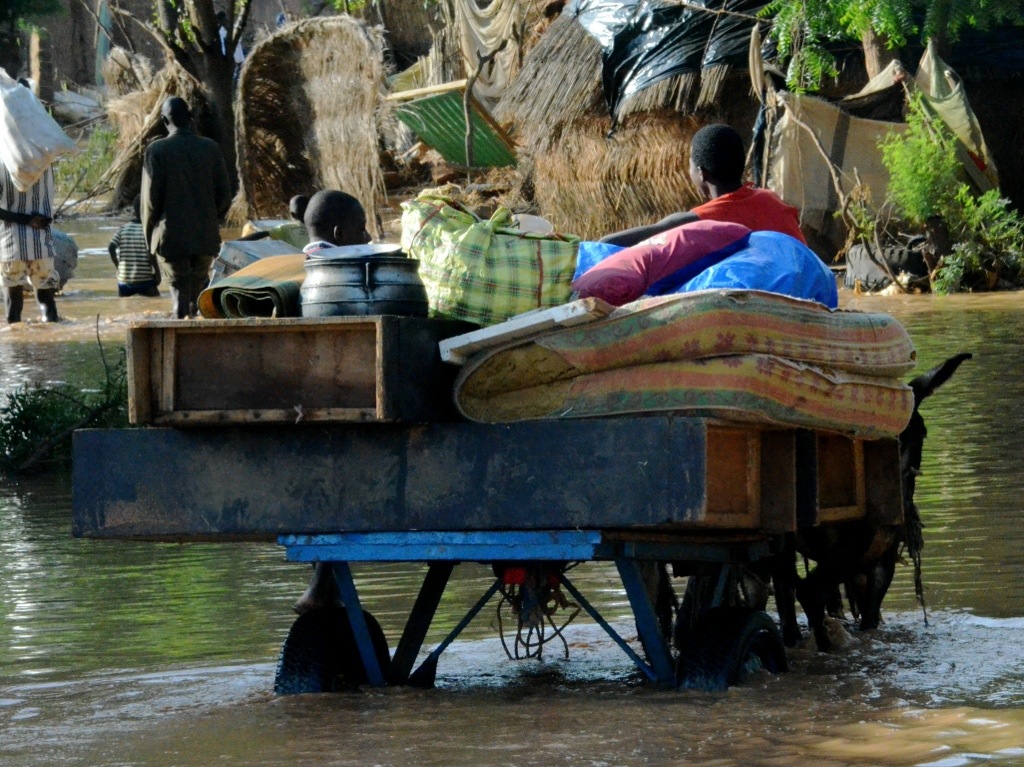
Heavy rains across the Sahel have resulted in flooding along the Niger River. Local papers have reported at least 43 deaths and the destruction of thousands of homes and farms in affected areas. Several neighborhoods in Niamey, the capital, have been submerged since August 19th. Families are living at schools and mosques, surviving with whatever items they were able to salvage from their homes.
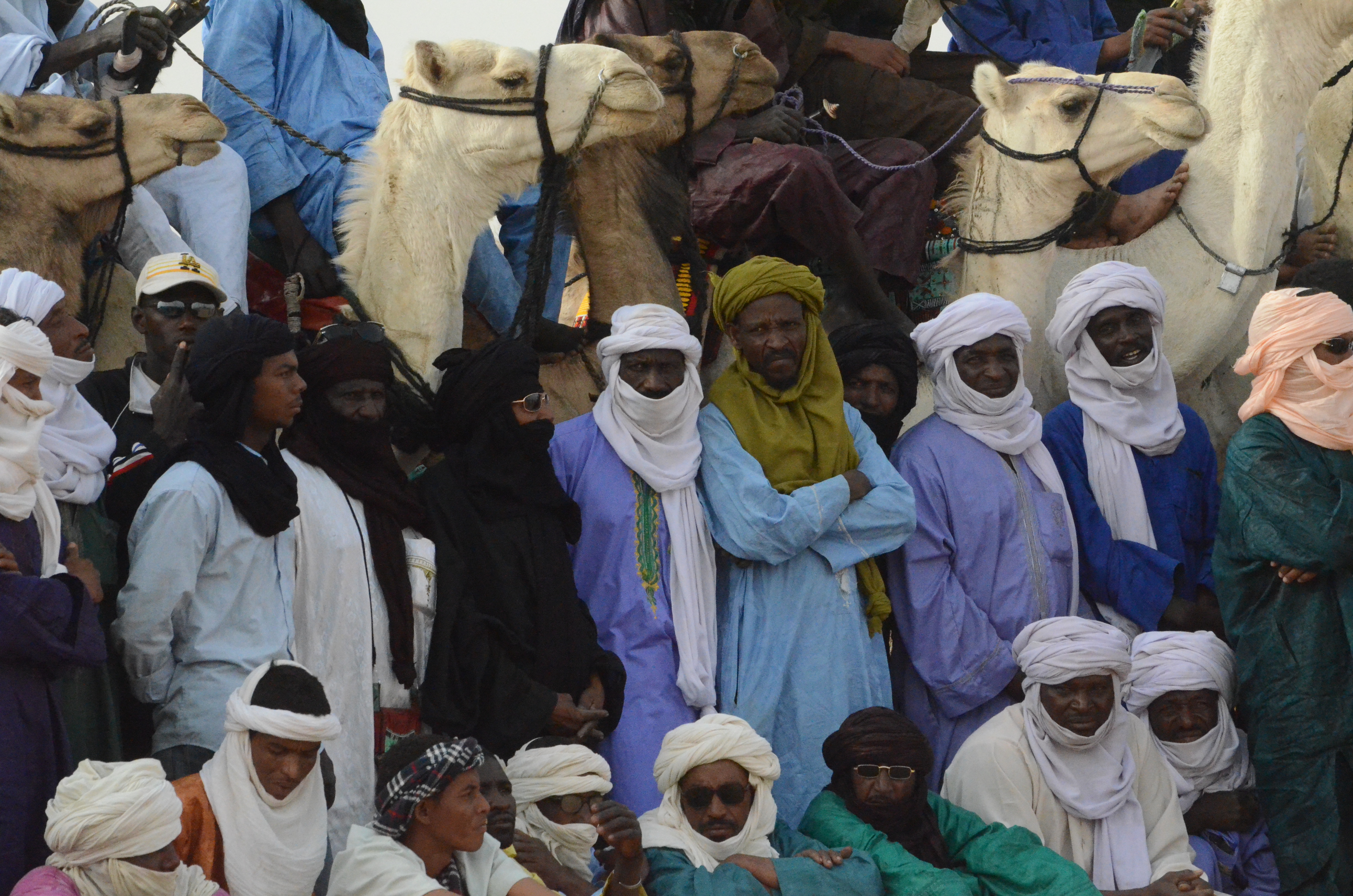
During my recent trip to the Aïr Mountains of northern Niger, Tuareg musicians welcomed us to Timia, an isolated oasis town nestled between steep mountains. According to Tuareg custom, men begin “wearing the veil” at age 18 to protect themselves from evil djinns, or spirits, that enter the body through the mouth. Conversely, a woman’s tent protects her from djinns, so she does not need to cover her face.
Niamey may not be full of world-famous monuments, but its appeal lies in opportunities to experience everyday life in Niger. If you are prepared to go beyond sipping beers on the terrace of the Grand Hotel, any of the following suggestions will lead you to discoveries that will only deepen your appreciation of this mellow West African capital.
1 – Test your off-road driving skills. Visit surrounding villages, accessible only by 4WD vehicle, to take in views of sandy riverbeds, palm-filled oases, and herds of Bororo cattle.
I am clearly not going to win this one. (photo credit, Dad)
2 – Learn to play the djembe. Le Centre pour la formation et promotion musicale (CFPM) has every type of traditional Nigerien instrument on display and an excellent video library of music. If you have time, sign up for a drum class.
3 – Get creative with the local cloth. Off-the-rack clothing is not as popular as shopping for your own pagne and designing an outfit with the help of a tailor. It takes about a week to finish your order and costs up to 10,000 CFA total (cloth plus labor).
Woman wearing a dress made from pagne (photo credit, Dad)
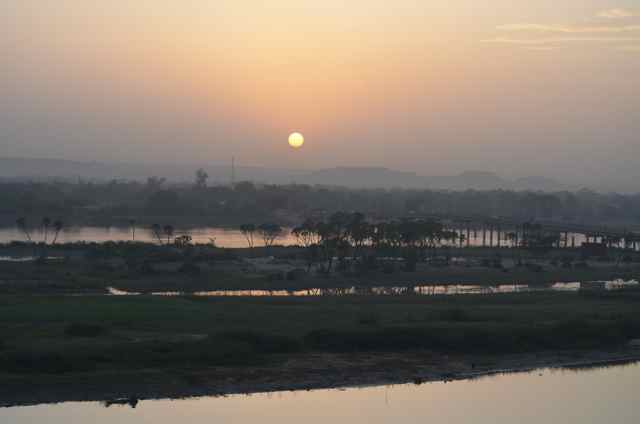
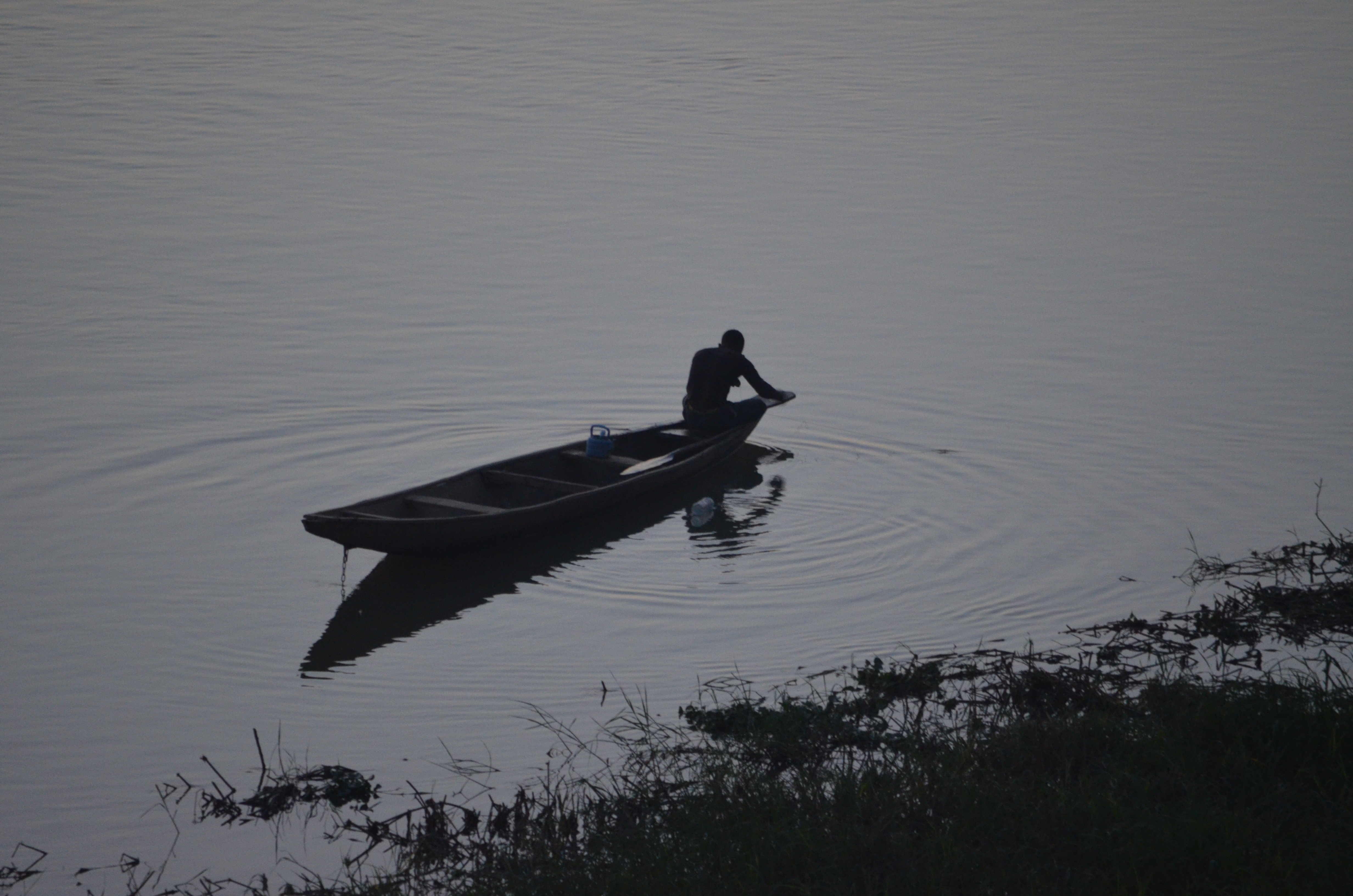
4 – Observe hippos from your taxi. When crossing the Kennedy Bridge, keep your eyes open for hippos. They like to hang out near the sandbar on the eastern side. If you want to see them up-close, hire a pirogue (pictured) from the restaurant below the Grand Hotel and get a better look at life on the river, too.
Fishing from a pirogue below the Grand Hotel (photo credit, Dad)
5 –Spot numerous bird and bat species year-round. Colonies of fruit bats inhabit the mango trees around town. Look for Abyssinian Rollers, Red-billed Hornbills, Bee-eaters, Kingfishers, and many other colorful birds along the river.
An Abyssinian Roller (photo credit, Dad)
6 – Put that Tuareg scarf to use in a real sand storm. Find Tuareg turban cloth, known as shesh, at the Grand Marché. When the rains arrive in June, Niamey is slammed by sand storms that engulf the sun and plunge the city into night-time darkness. Your ears, nose, and mouth will thank you for your purchase.
The wall of sand will hit in 2 minutes. (photo credit, Husband)
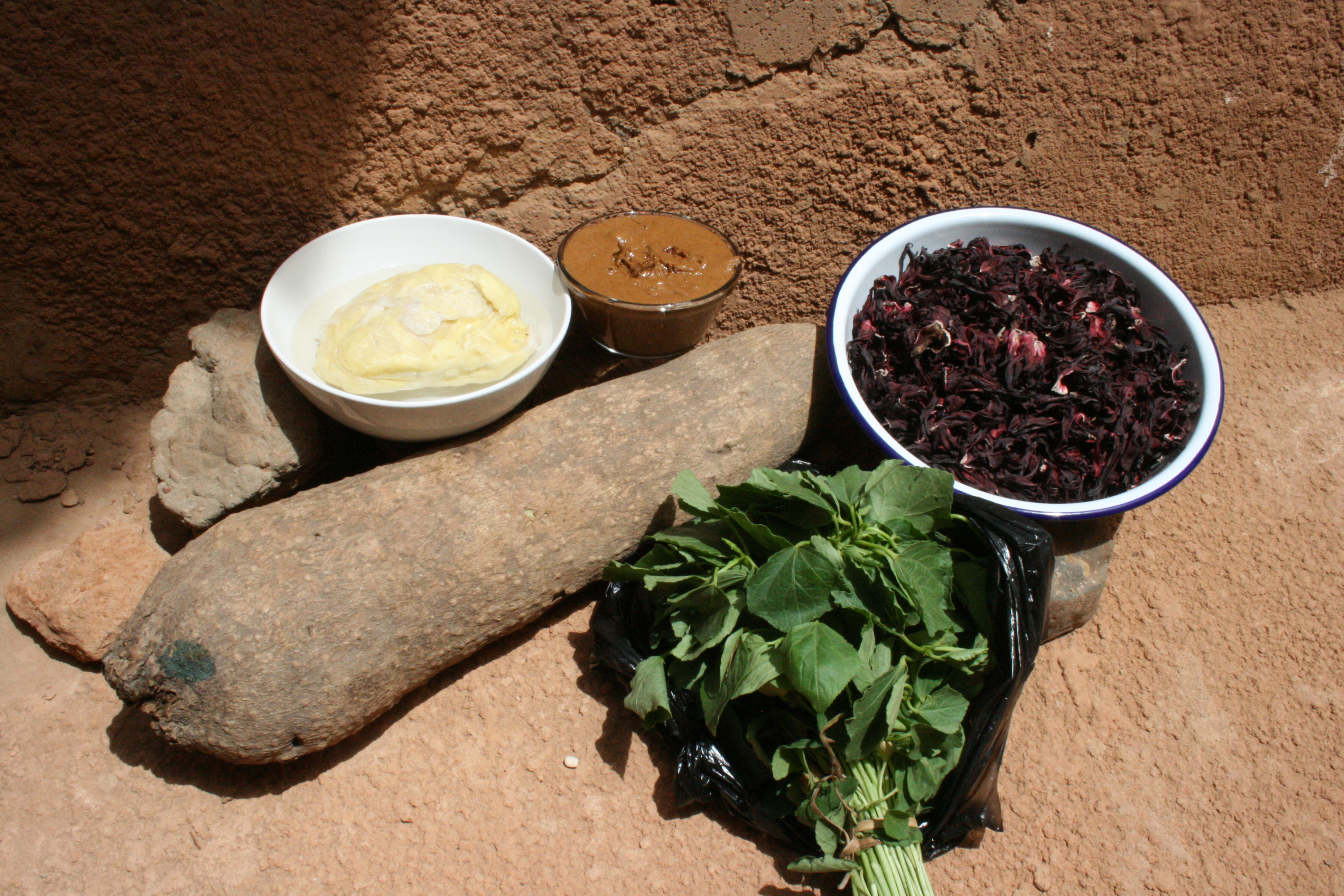
7 – Challenge your inner-chef with local ingredients. Every neighborhood has its own lively market. Look for tchapata – a leaf eaten in sauces, soumbala – a pungent seasoning made of crushed néré seeds, and baobab powder – the pinkish flesh of the baobab fruit used in drinks.
From left to right: shea butter in water, peanut paste, igname, bissap, oseille leaves
8 –Watch blacksmiths at work in the market. Visit Katako Marché where scrap metal is turned into shiny new pots, spoons, bar-b-q grills, sling-shots, and many other household items. Pop over to the traditional medicine section nearby to buy some protective gris-gris while you’re at it.
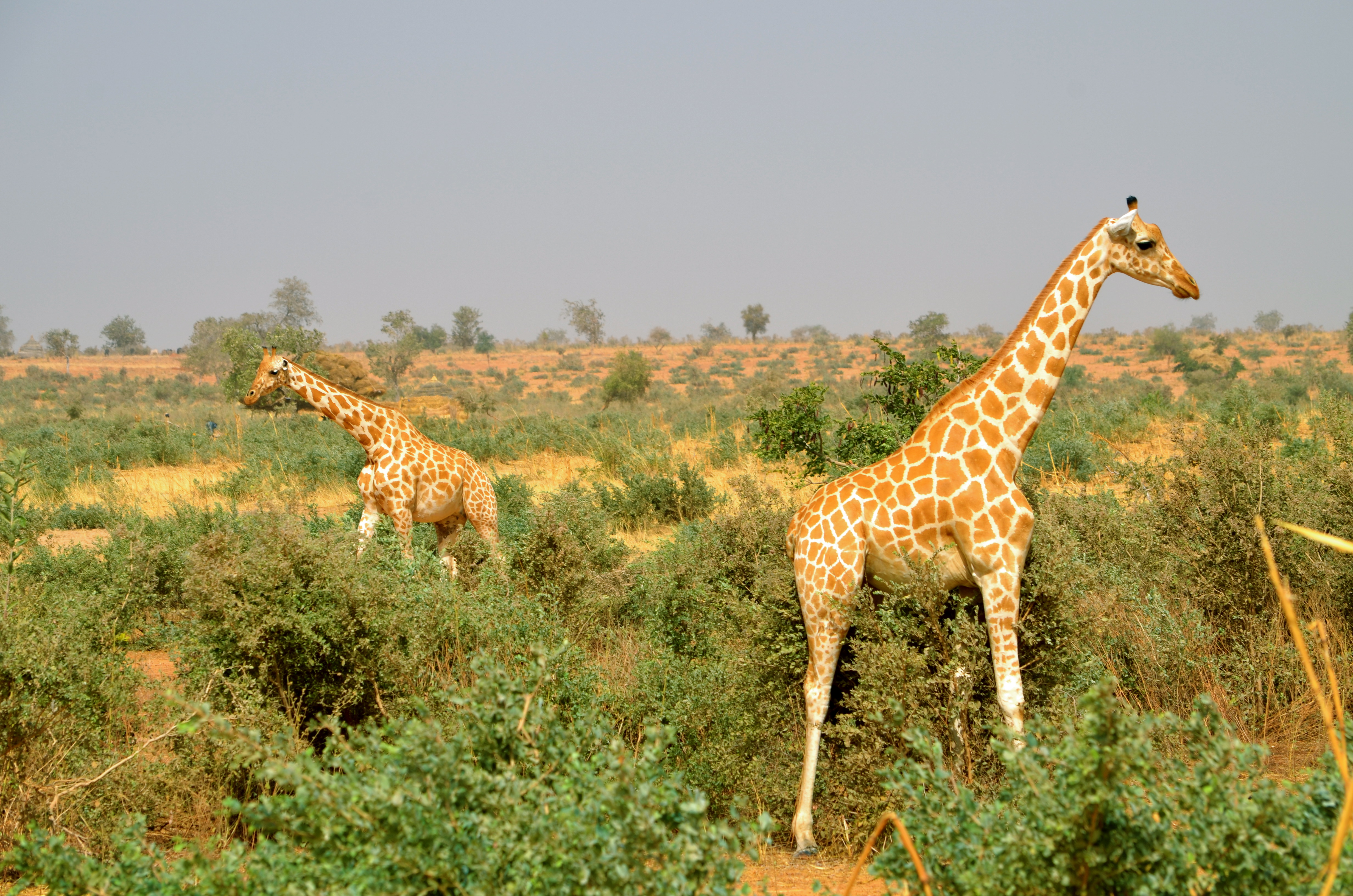
9 – Brake for giraffes crossing the road. Just 45 minutes southeast of town, dive into the bush with a certified guide to look for West Africa’s only giraffe herds. The Kouré reserve fee helps improve life for villagers in the area and also funds giraffe conservation efforts. If you’re lucky, you’ll see them crossing the main road.
Young giraffe scratching its belly. (photo credit, Dad)
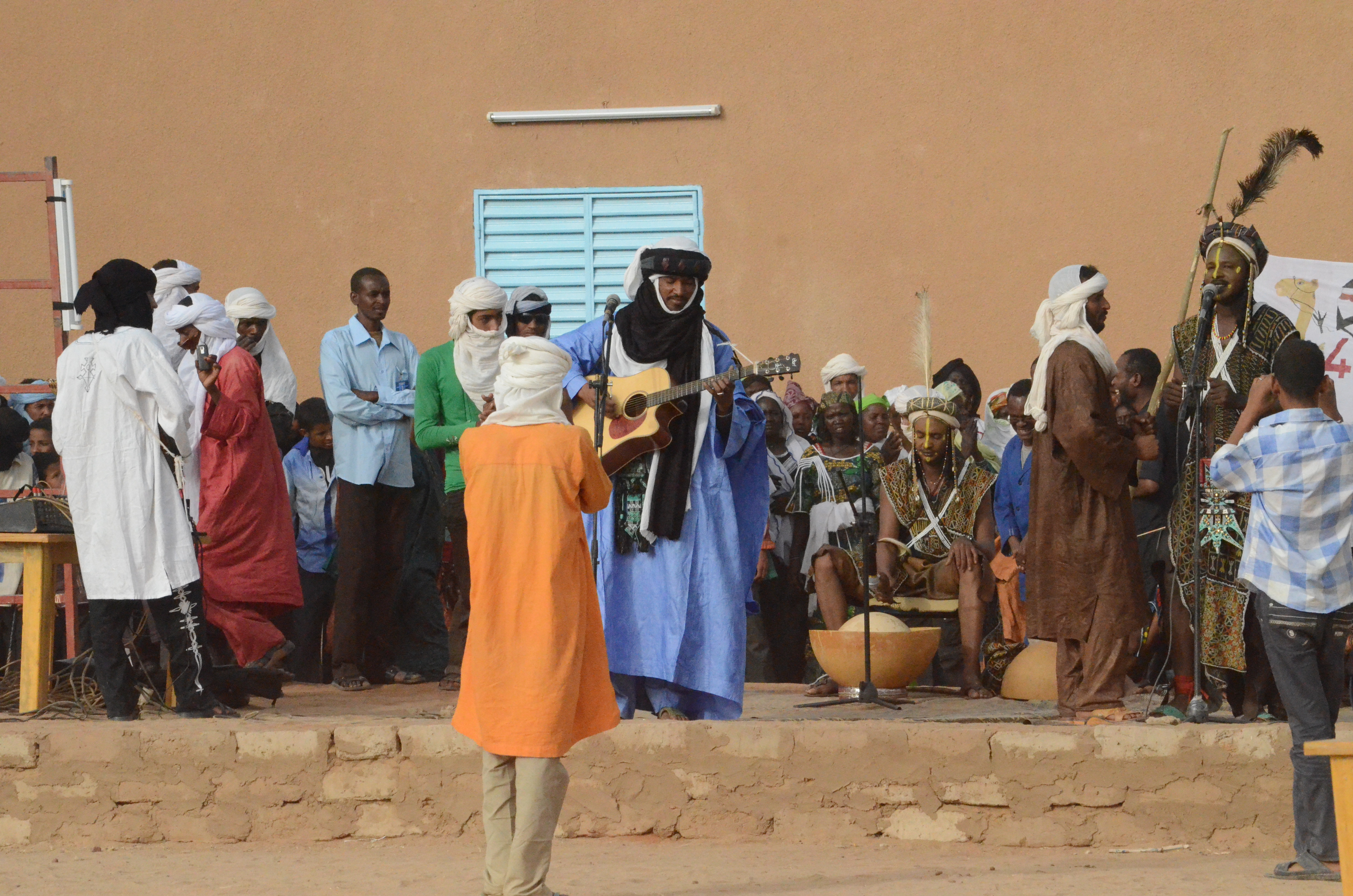
10 –Chill out to the sounds of Etran Finatawa. The Tuareg – Wodaabe band is world famous for its nomad blues, mixing ethnic styles and languages. Catch a concert at a bar or cultural center around town. Go to the CFPM (see #2 above) for a current schedule.
Etran Finatawa playing at a camel festival.The band has an eclectic fan base…
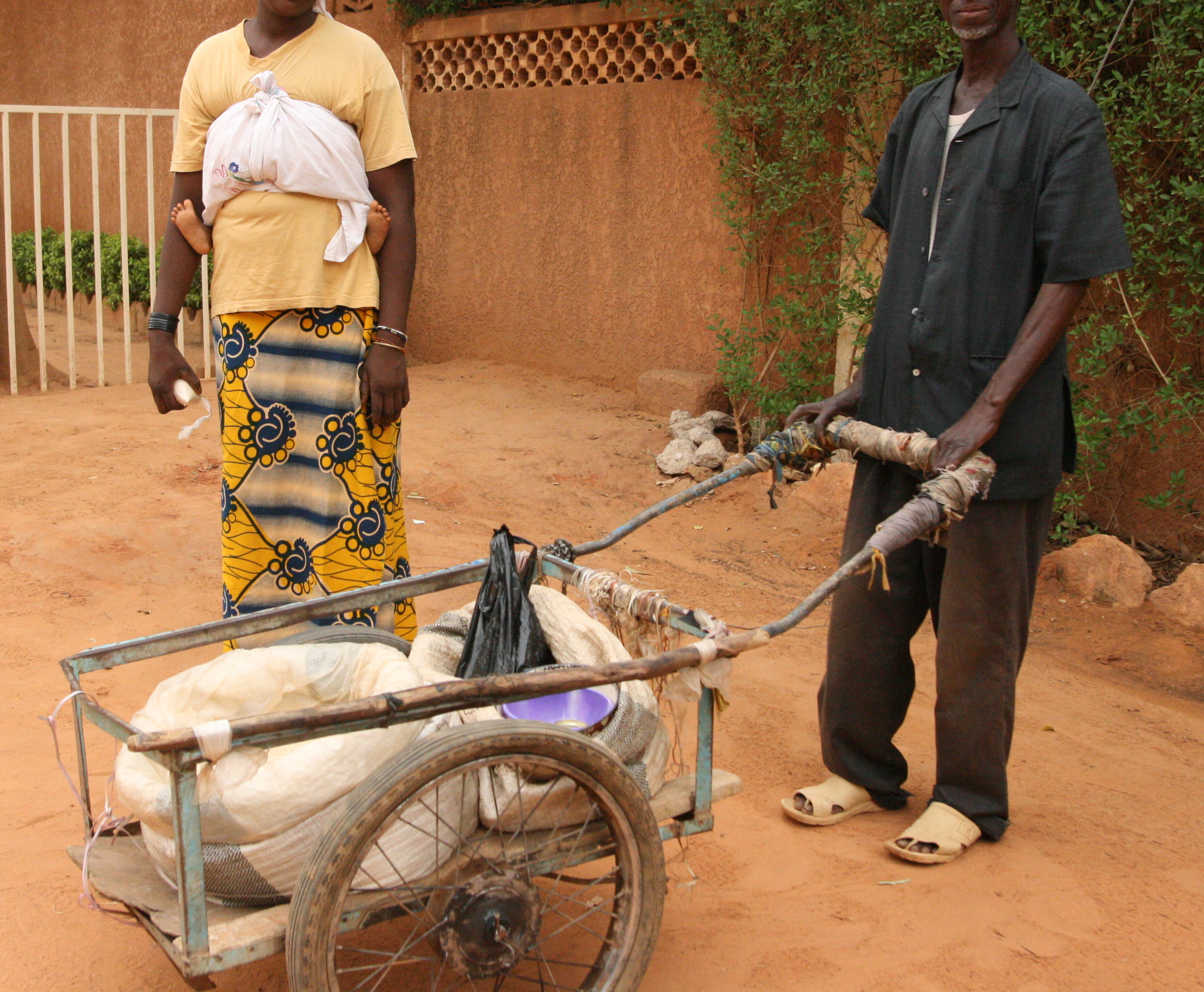
In Niamey, capital of Niger, commerce is king. Driving down the road you see everything from shoe-shine boys to strobe lit storefronts selling jeans and polo shirts. But the entrepreneurs who captivate me the most are the people who carry their products through the neighborhoods, crisscrossing the city’s sandy roads in the hopes of capitalizing on Niamey’s mellow street life.
So, on this sunny day, armed with a brightly colored plastic mat and some coins, I wave at the guards sitting in front of my neighbors’ walled homes and take up a shady position by my gate. Sitting in the sand, I wait for Niamey to come to me.
09:45 Start. So far, all I see are black ants and a herd of mama goats with their babies scrounging for rubbish along the edges of the walls. The kids are all legs and their long ears flap against their faces when they race to catch up with their mothers. The mamas’ stomachs protrude unusually, probably from eating too many plastic bags, and their heavy udders make me shift uncomfortably.
10:03 A tall man comes loping along my street. In each hand, he carries a cluster of silver door handle sets, keys dangling from the locks. He looks at me as he passes and holds up the cluster in his left hand, eyebrows inquiring as to whether or not I’m interested. I shake my head and he continues on his way.
Gari vendor and his customer. Gari is a powder made from manioc that is eaten as a dough with sauce or a porridge with milk.
10:10 The tea guy shows up with his wooden box and wire basket of coals. I wave to him and he comes over, placing his things on the ground in front of me. I order a black tea with sugar. His box is stuffed with everything he needs including charcoal and a Mr. Clean bottle. After throwing the tea wrapper into the street, he lifts the dented kettle from its nest of coals and pours out the steaming water. He uses a tiny spoon to shovel sugar into the tea. I knock back the drink and hand him 50 CFA. He rinses the glass with water from the Mr. Clean bottle, picks up his gear, and continues on his way.
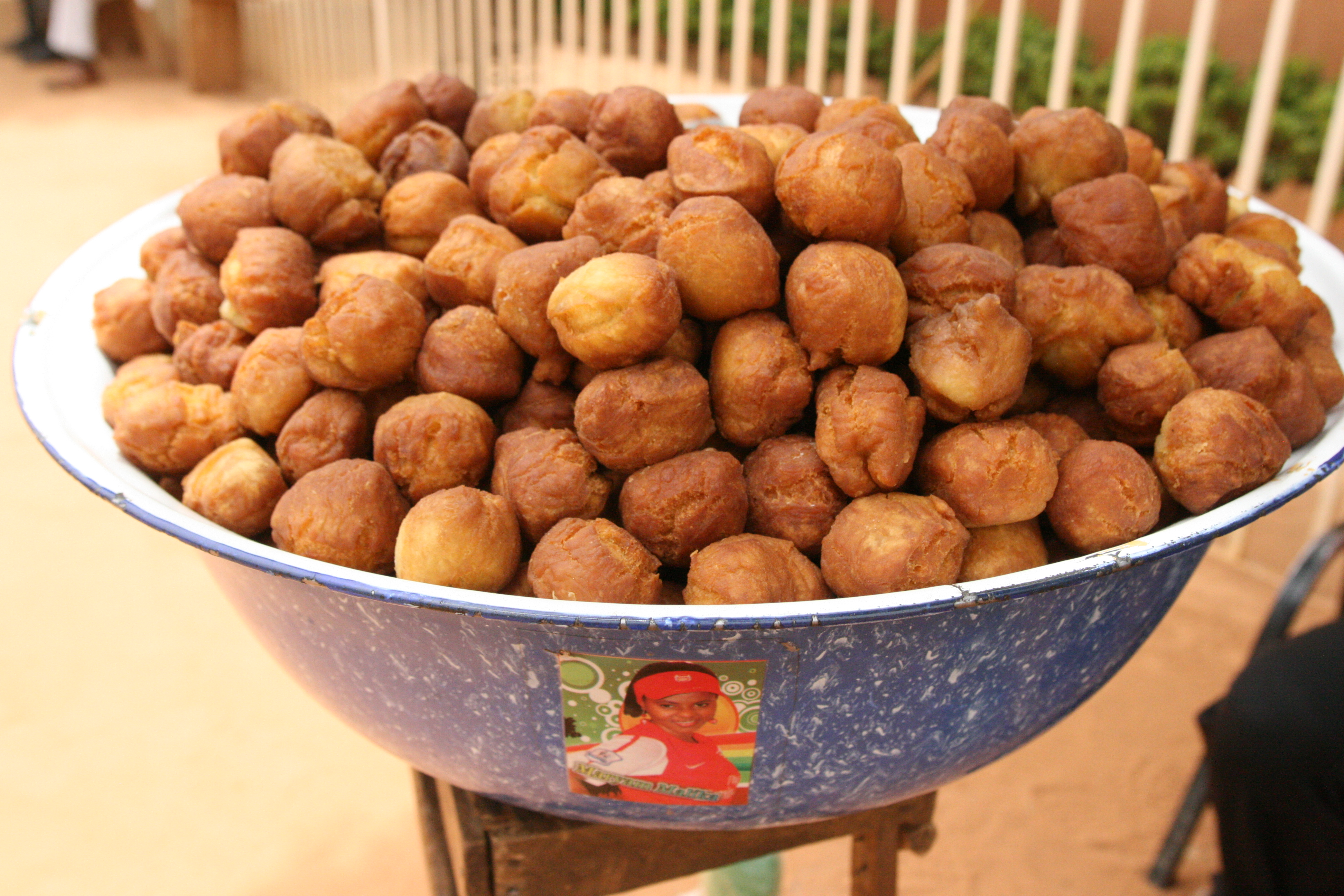
Sweet doughnuts. We might not have Krispy Kreme, but our doughnuts are delivered to our gates.
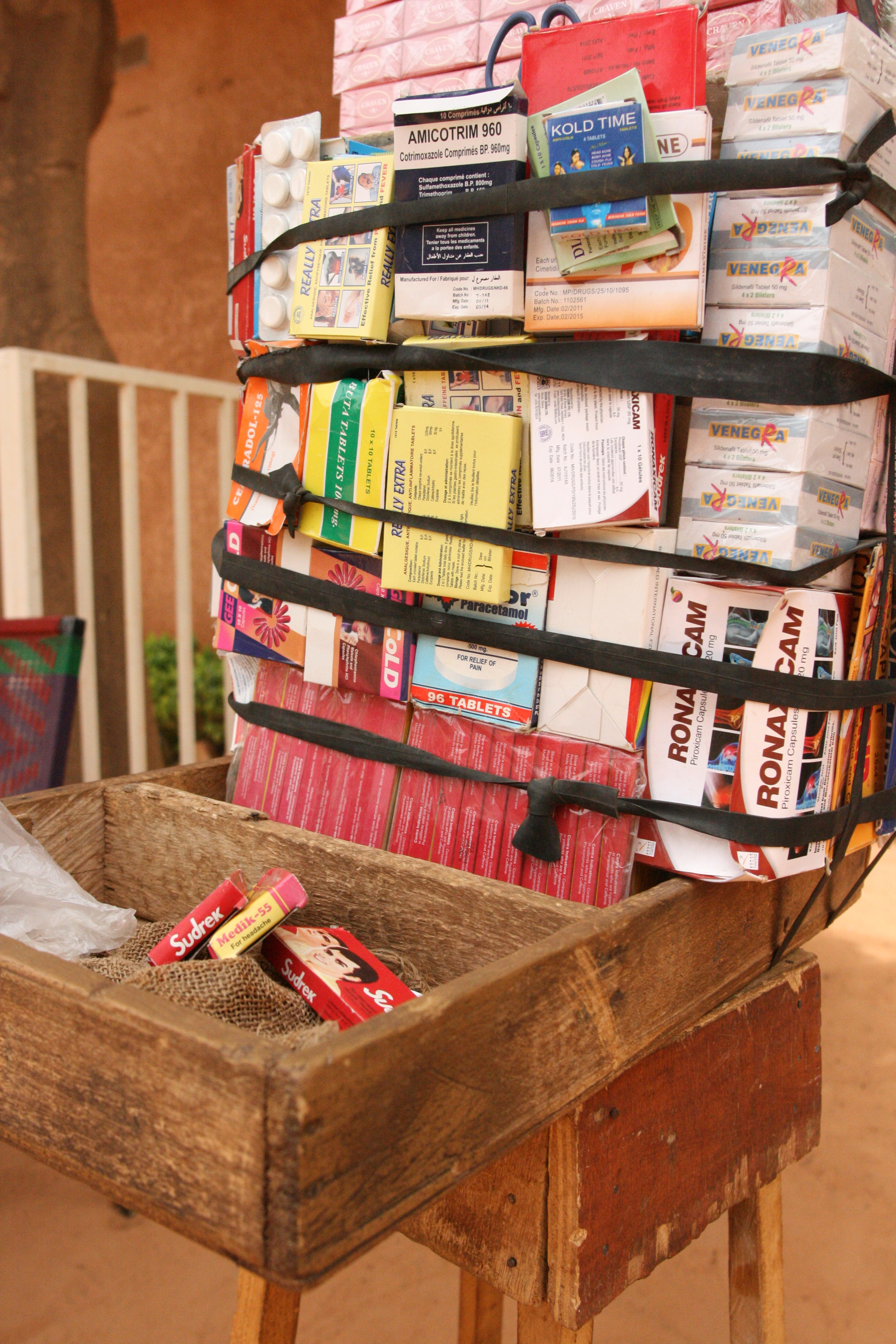
10:27 The Nigerien 7-11 comes bicycling down the road. The old man is dwarfed by the large pile of Nigerian candy bars, Craven cigarettes, and boxes of tea with Arabic lettering strapped together like a Rubik’s cube gone mad on the back of his bicycle. The wheels squeak as he rolls past, leaving a snake-like tread pattern in the soft sand.
Pharmacy on foot. The vendor balances the box on his head and carries the stand over his shoulder as he walks down the road.Pain relief medicine from India. Customers can buy it by the pill for 50 CFA each or the entire package for 500 CFA.
10:40 I stand up with my back against the stucco wall and watch as a herd of longhorn Bororo cattle comes slowly down my street. The lyre-shaped horns of the bull in front sway from side to side as he places each foot over the tread pattern, erasing all proof of the 7-11 bicycle. An old man casually follows the herd, his cloudy eyes shaded by the straw hat on his head. He carries a wooden stick across his shoulders.
11:06 Unfortunately for the man with the flat wooden case, I am not in the market for shiny pastel hair beads, questionable Chinese beauty creams, or dangling gold and silver earrings made of plastic. He returns the case to his shoulder and continues down the street.
11:11 Not far behind the jewelry man is the shoe vendor. Sweat circles radiate from under the straps of his backpack bulging with shoes. He is holding bright white sneakers and Chaco knock-offs in both hands. The guards seem to know him; they shout hello.
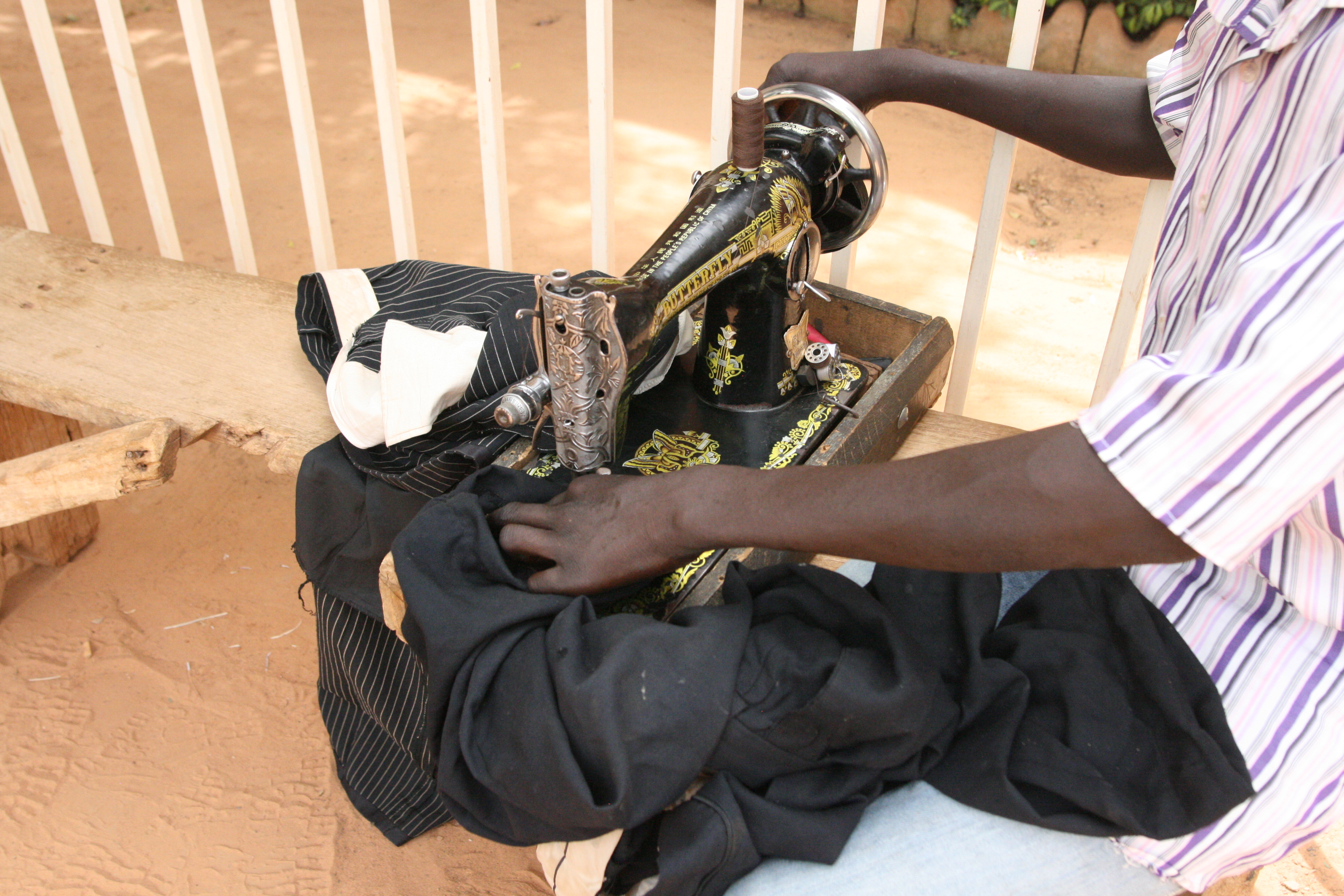
After the shoe vendor, the street goes quiet, and I decide it’s time to stretch my legs and get started with my day. But, I know that Niamey will continue to make its rounds outside my gate until the heat brings on the afternoon torpor. Women with wide plastic buckets balanced on their heads will come by around lunchtime selling fried fish heads, sauces, and rice. Others will have water bottles full of ginger or bissap juice, perfect for the dry and dusty climate. And in the cooler light of dusk, the barber will make his rounds with his straight razor for shaving heads and scissors for cutting fingernails. He will be followed by the knife sharpener and the tailor who carry their tools of the trade on their shoulders, clanging scissors together to call out customers from behind their garden walls.
Tailor fixing a seam. The wheel on the right has a protruding handle that he uses to make the machine work.
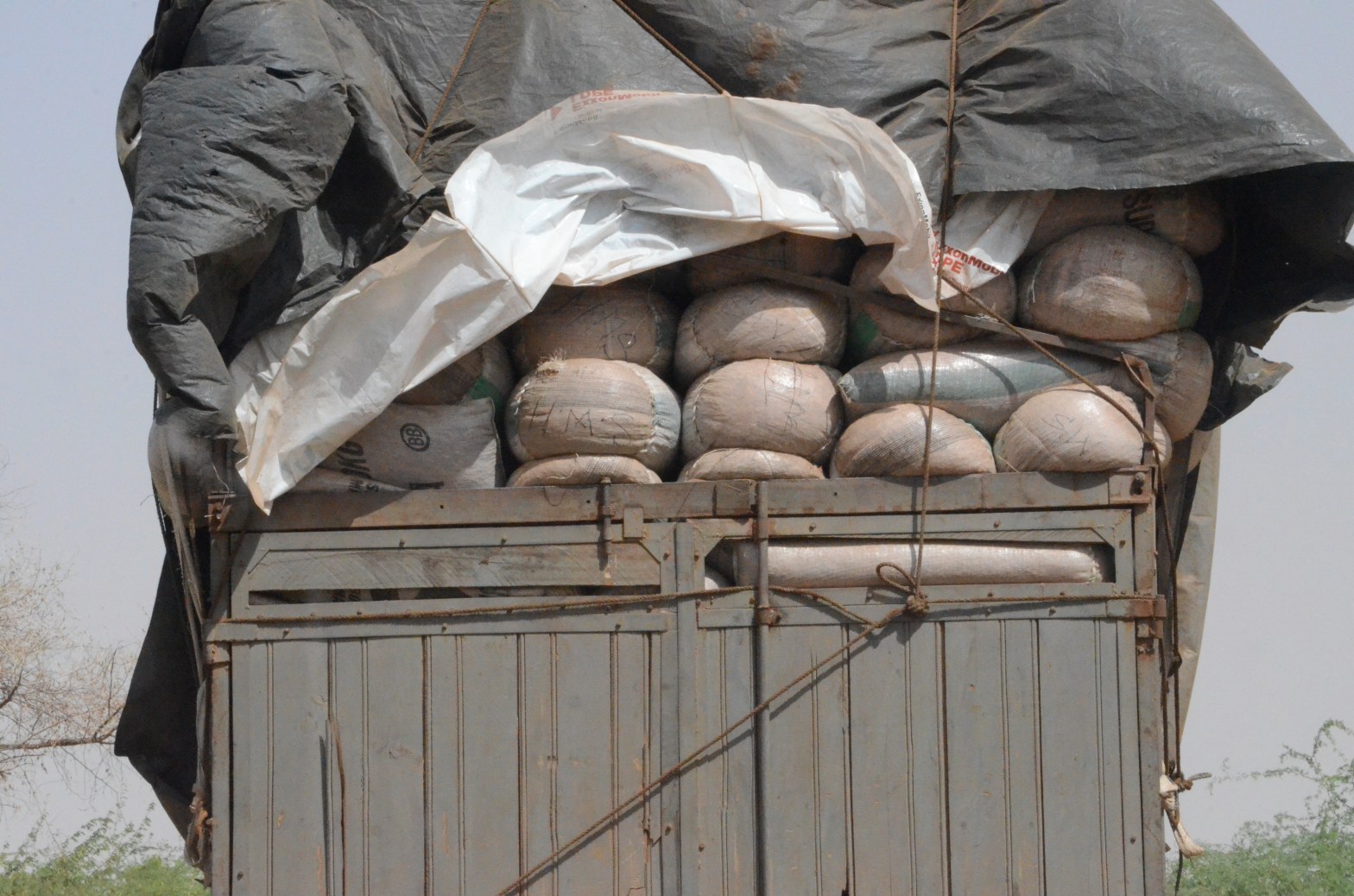
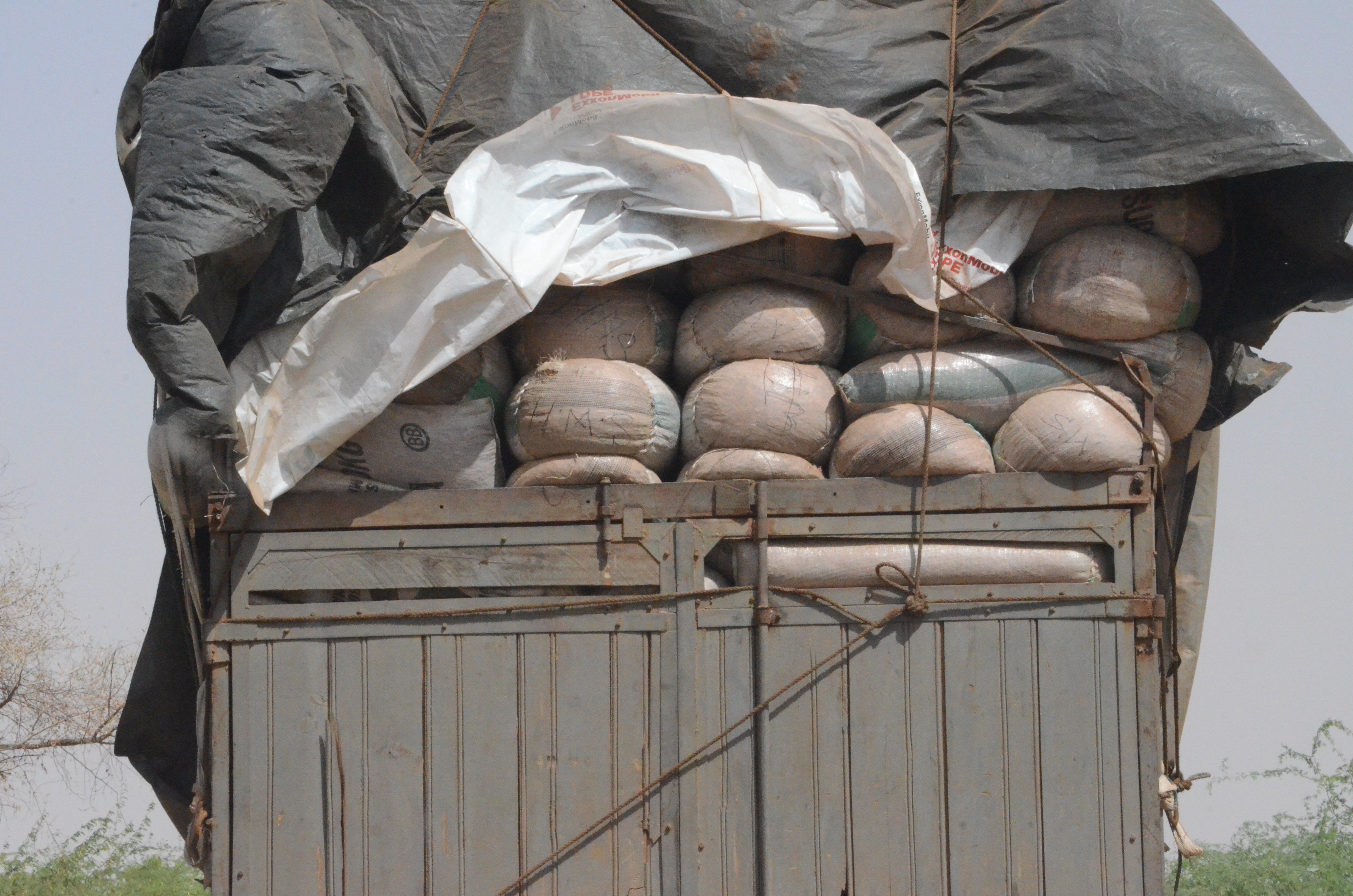
I can feel the rumble of the road along my back through the solid sacks of grain. Above me, a silvery morning sky. The flat, scrubby tops of the familiar plateaus, the Three Sisters, loom into view on my left. The cool brown water of the Niger slips by on the right. We’re almost to the Kennedy Bridge. I’m almost home. As I turn onto my side, the wad of bills sewn into my waistband digs a hollow in my hip. It’s been three years.
Niamey is as I left it, a mass of corrugated tin shacks with hand-painted signs, shelters made of grass mats, and tall mud walls over which bougainvillea branches trail, hinting at shady opulence on the other side. All of this is held together by a network of dirt roads and the odd paved street in various states of disrepair or construction. An army of white Toyota Starlet taxis shares the road with donkey-carts, camels laden with straw bundles, and Chinese-made motorcycles weaving dangerously through traffic and crater-sized potholes.
Our overburdened eighteen-wheeler turns onto the Rue de l’Indépendance. We pass the Stade General Seini Kountché where my brothers and I cheered for Mena victories on the soccer field. As we lumber past the green-lettered awning for the Pharmacie Deyzeibon the street becomes narrower, congested by the gaggle of micro-buses picking up passengers and cargo and the numerous vendors sitting amongst piles of bright tomatoes, striped West African cucumbers, and purple onions arranged along the side of the road.
We turn left into a cobblestone alley that cuts through the heart of Katako Marché, our destination. The air is full of sound. Cars honking, motorcycle engines revving, hammers clanging on metal, and voices. Hundreds of voices. “Gafra! Gafra!” someone yells as I stand up to stretch. I look over the side of the eighteen-wheeler to the street below and see a young man pushing a cart loaded with long bundles of rebar. He is trying to push his way through the crowd of shoppers who have been squeezed into the narrow space between our truck and the gutted shops where produce wholesalers store mountains of freshly unloaded mangoes, yams, and onions.
A middle-aged man with three lines of scarring running from the corners of his mouth to his cheekbones, like whiskers on a cat, shouts up at me. I begin throwing sacks of grain down to the small area he has cleared. The sound of fifty kilo sacks landing on the cobblestones is added to the cacophony of market noises. My sleeveless white tank-top sticks to my back, but I continue at a steady pace to numb thirst and hunger so I will make it to the last sack of grain.
An hour later, the truck is empty and I am free to find my way to my parents’ house. A young boy with a cart made from recycled scrap metal walks towards me. I give him 10 CFA for a bag of water from the Styrofoam cooler he is pushing along. Biting off a corner, I suck down large mouthfuls of water, letting the cool liquid slide down my throat and fill my belly.
I pick my way past young men in western clothes and aviator sunglasses filling up their wheelbarrows with mangoes from the wholesalers. They will push their loads under the scorching sun to every corner of Niamey looking for customers.
As I make my way out to the street, a veiled woman in a maroon Mercedes cuts in front of me, rolls down her window and screeches at an old woman selling onions, “Margé no?”
“Zongo! Zongo!” says the vendor. The woman reaches into her handbag on the passenger chair and tosses the old woman a 500 CFA coin. The vendor transfers a bowlful of onions to a black plastic bag, and passes them through the car window. The Mercedes quickly pulls away, almost knocking over a motorcycle passing on its left. I stick out my finger and point it towards the road. A white Starlet Taxi pulls up and I climb in.
Itchy Feet Syndrome, my Grandfather calls it. A condition whose symptoms include, but are not limited to: a need to see what’s just beyond the horizon, an overactive imagination, and a certain inability to sit still. Although scientifically unconfirmed, it appears to be a side effect of the equally hypothetical Travel Gene.
My family has been migrating across the globe for centuries. From the Pearl River Delta and the rainy British Isles, my forebears weathered many a miserable situation to get to their final destinations. And once there, some of them kept going. I realize that my ancestors’ wanderings were most likely spurred on by less-than-desirable situations at home; however, I can’t help but wonder if a healthy dose of curiosity and a need for adventure egged them on a little, too. Maybe these personality traits were passed down through the generations? Perhaps via the Travel Gene?
No doubt, some good story-tellers in the family were also behind our clan’s constant meanderings. I grew up on tales of a sea-faring great-great-grandfather, voyages by covered wagon, and WWII exploits, all of which fired my imagination and inspired me to go out into the world in search of my own stories.
For me, the first signs of Itchy Feet Syndrome began to appear at the age of two when my parents took me on my first road trip through the American Southwest. Since then, I have lived and traveled throughout the Americas, Asia, Europe, the Middle East, and Africa. I imagine that my appreciation of beautiful scenery, appetite for culture and history, and nosiness about how other people live will keep me on the road. And, it’s all thanks to that inherited Travel Gene.
Floating down the Niger with the wind in her ears – my Azawakh has the Travel Gene, too.









 106 Meters from the Road