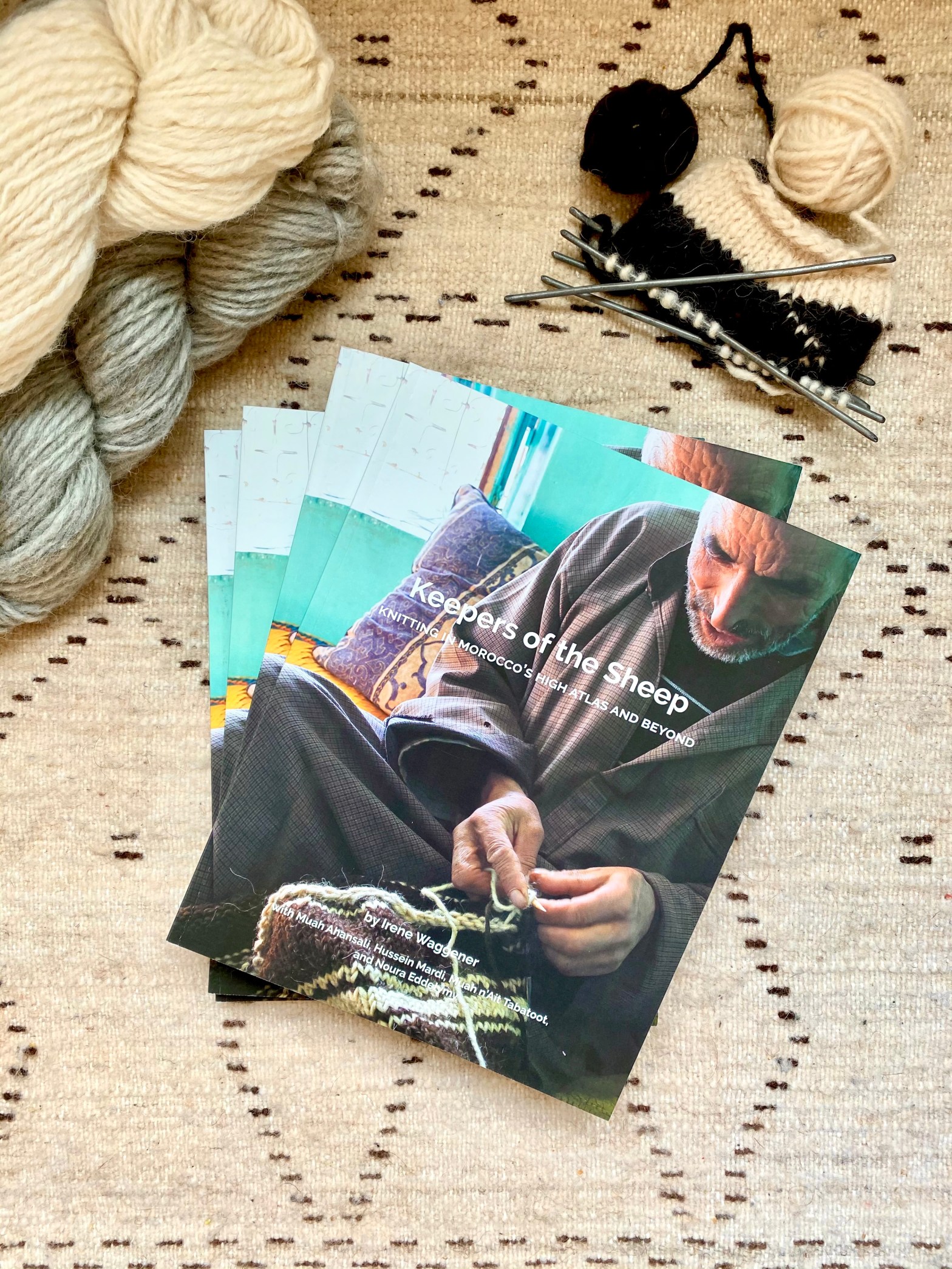
The question of knitting’s origins became a fascination for me when I was in my early twenties, but the limited information available at the time left me feeling unsatisfied. To be sure, the earliest chapters of knitting history are murky and obscure, making it very difficult to confidently say anything about the craft’s origins. Nevertheless,Continue reading “Why I wrote about knitting in Morocco (and, e-Book now available)”
Author Archives: 106meters
Proto-Knitting: a technique for mending nalbound objects?
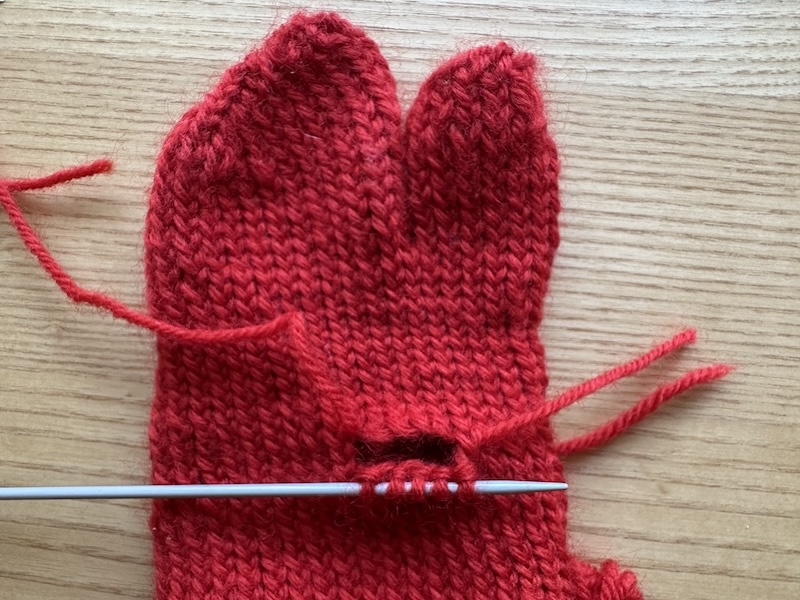
In my previous post (here) I outlined how I arrived at a theory for the development of knitting from cross-knit looped nalbinding. In short, I noticed that the structure of cross-knit looped nalbinding and crossed-stitch knitting are similar. The only difference was the direction of the loops (pointing down for nalbinding and up for knitting).Continue reading “Proto-Knitting: a technique for mending nalbound objects?”
Comparing Nalbinding and Knitting: did knitting come from nalbinding?
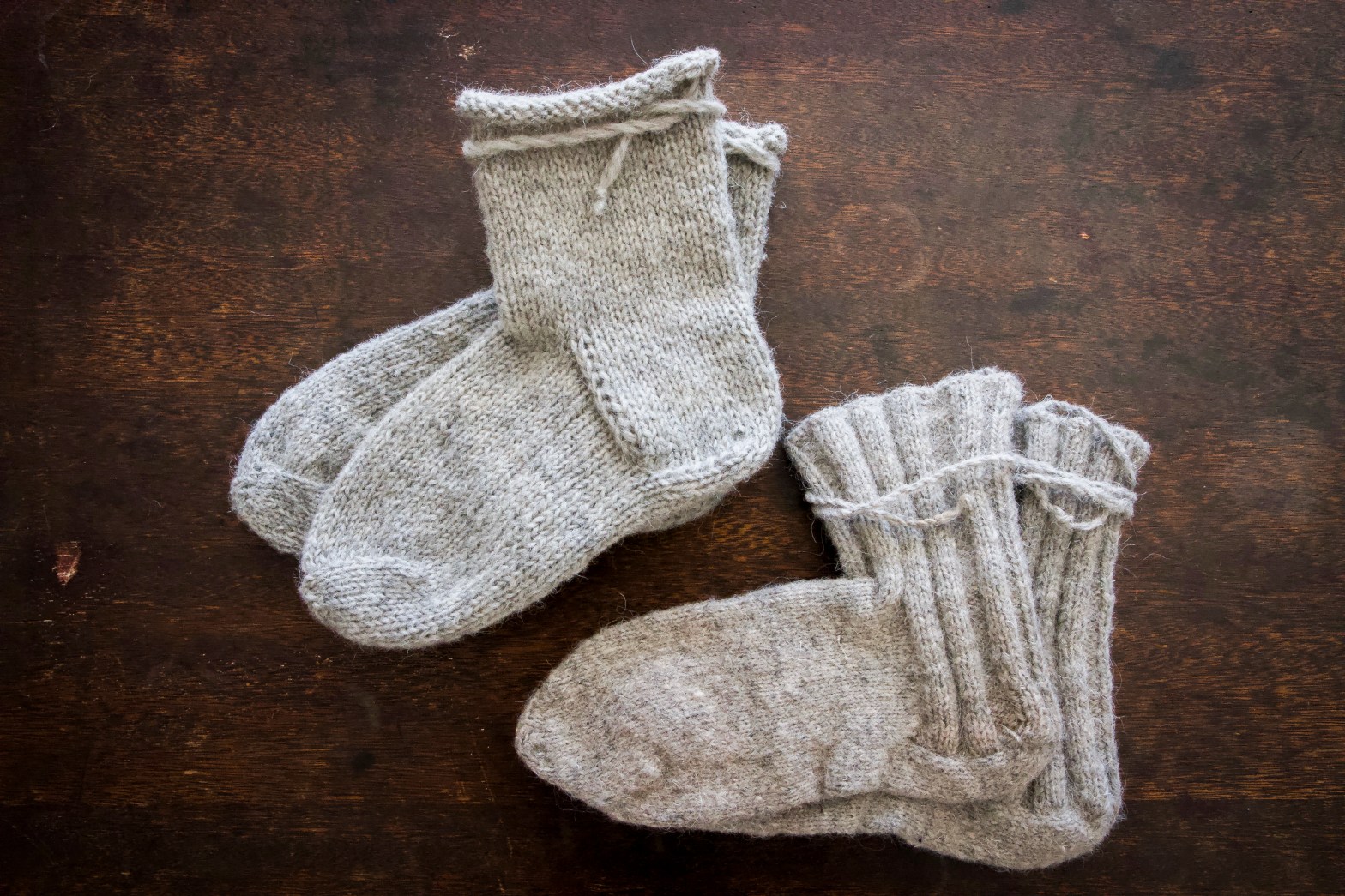
When talking about the origins of knitting, nalbinding is inevitably mentioned. This is because the objects we thought were the oldest knitted artifacts were in fact made by nalbinding, not knitting.(1) This is an easy mistake to make since nalbinding can produce a fabric that looks very similar to knitted fabric. But how similar areContinue reading “Comparing Nalbinding and Knitting: did knitting come from nalbinding?”
The Earliest Evidence for Knitting… so far
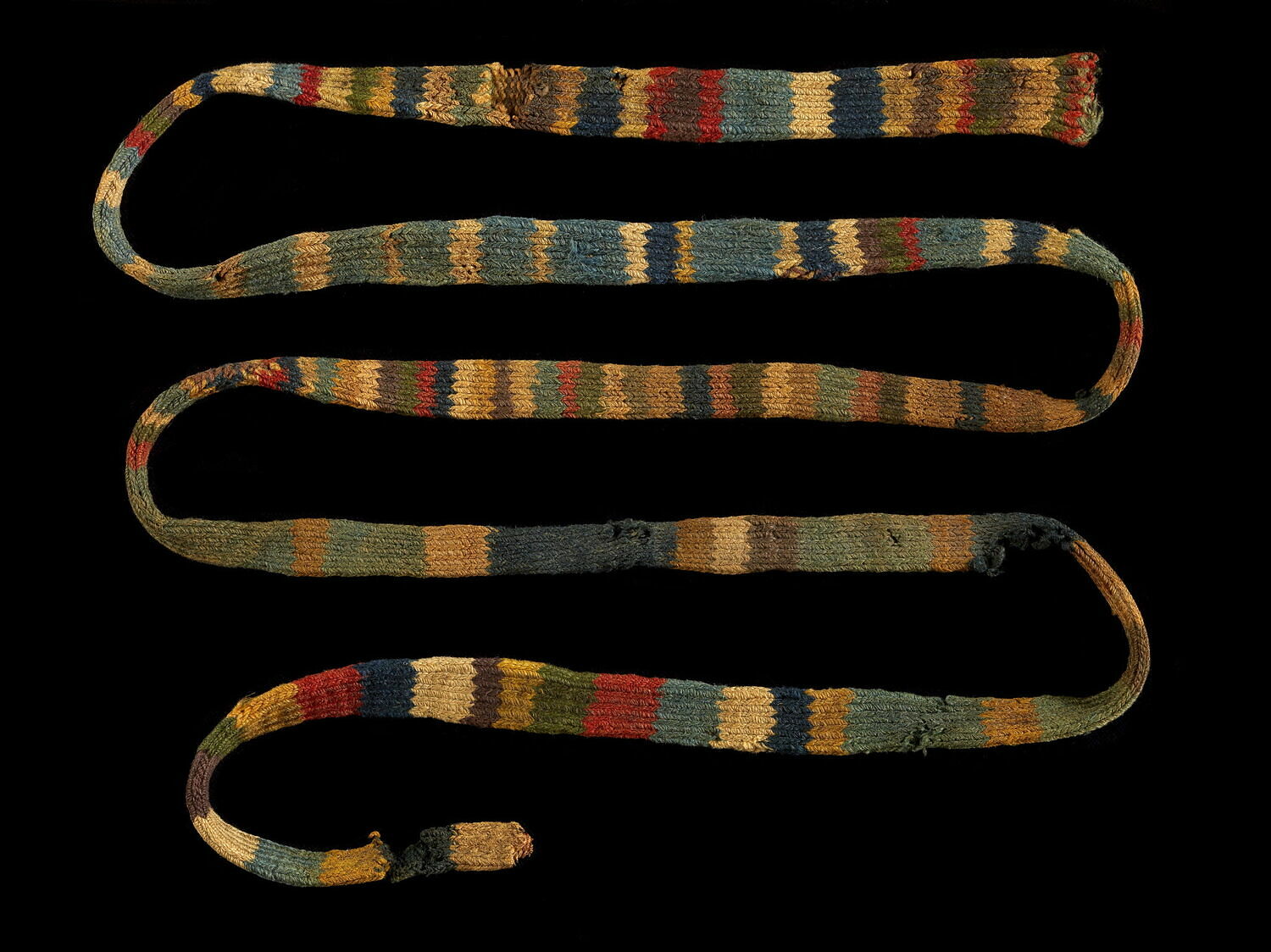
What is the earliest evidence for knitting? This is a question whose answer will evolve over time as interest in knitting research grows and brings more material to light. Many books that cover this topic (including my own – Keepers of the Sheep: Knitting in Morocco’s High Atlas and Beyond) follow in the footsteps ofContinue reading “The Earliest Evidence for Knitting… so far”
Marashi Aseghnagortsutyun (Marash Embroidery) Part I: more evidence for Armenian and Egyptian connections?
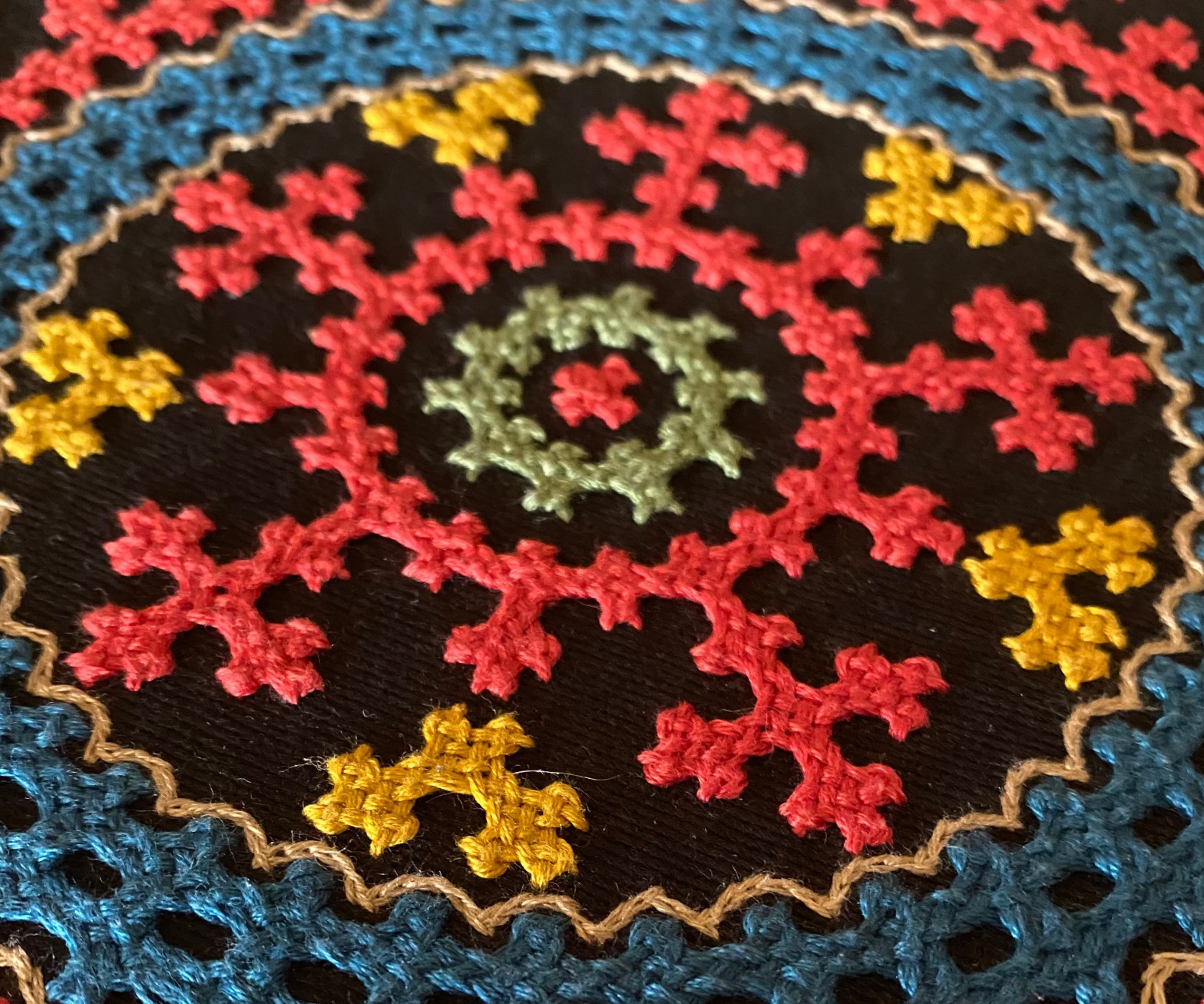
Back in November, I went to the Ashmolean Museum in Oxford to see a few textiles in their collection that are not on display. Before my appointment, I toured the textile room (Gallery 5, Floor -1) where I was very excited to see two fabric scraps (below) with a unique type of embroidery that IContinue reading “Marashi Aseghnagortsutyun (Marash Embroidery) Part I: more evidence for Armenian and Egyptian connections?”
Tarriwin, or Middle Atlas Leg Warmers, in Photos
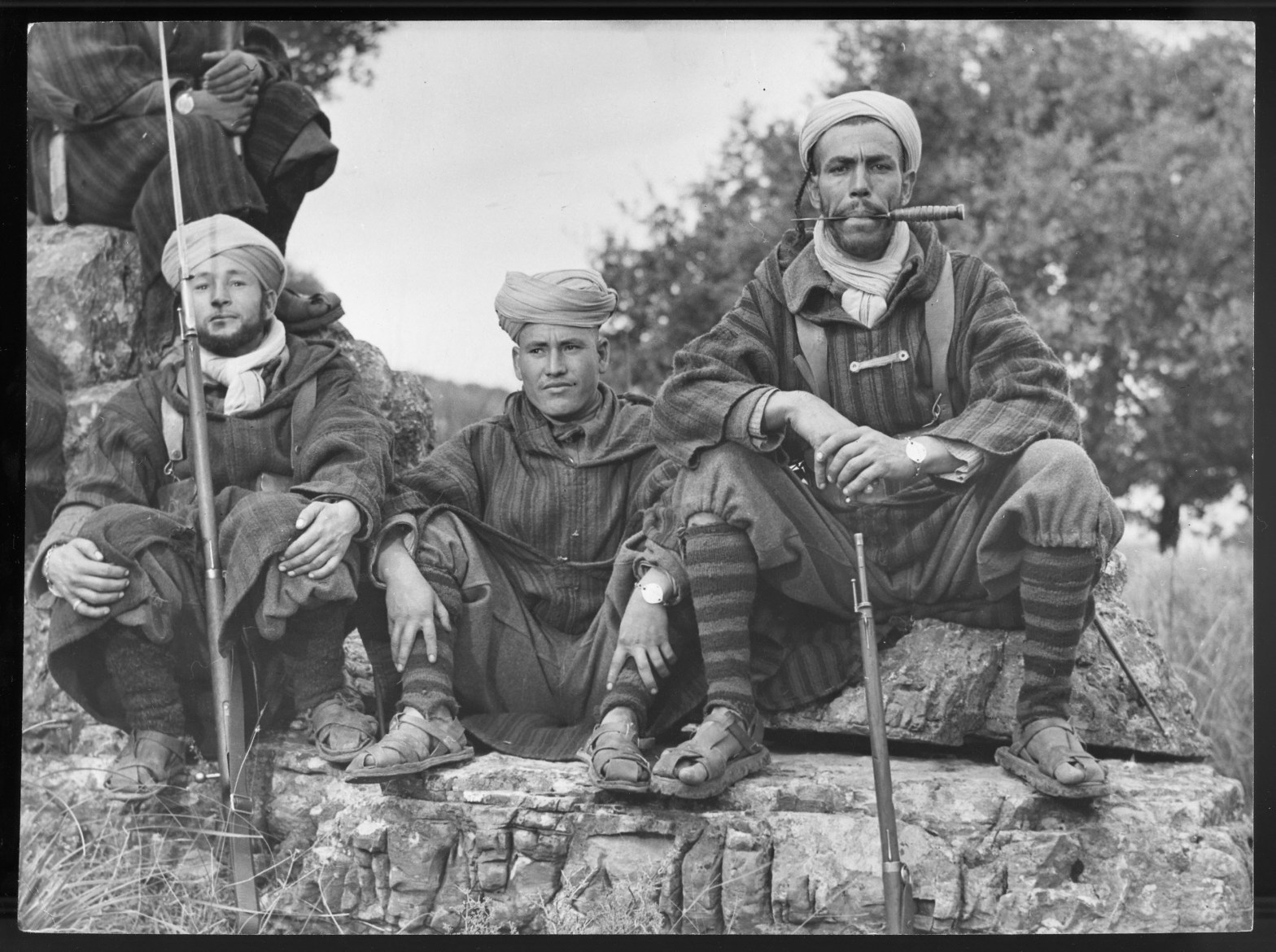
Two posts ago (here), I wrote about how I learned of tarriwin; my experience trying to find tarriwin knitters; and my hypothesis for the knitting technique used in making them. Following that post (here), I wrote about tarriwin knitting and how it might help to untangle the history of knitting. Now, I’d like to shareContinue reading “Tarriwin, or Middle Atlas Leg Warmers, in Photos”
Why is Moroccan Intarsia-in-the-Round Knitting Important?
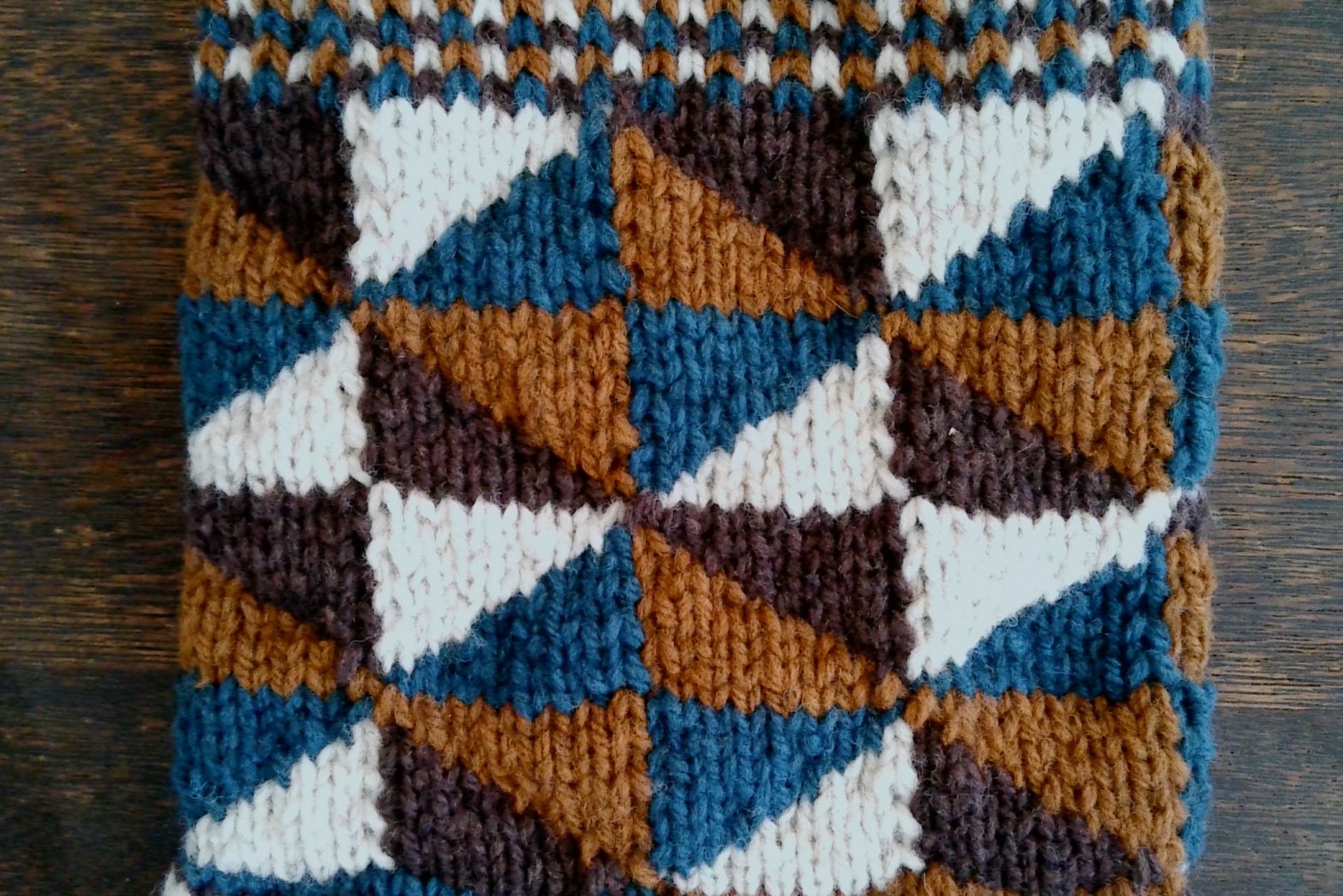
Moroccan Knitting and the History of Knitting The history of knitting has intrigued me since my early 20s when my mom gave me Nancy Bush’s book, Folk Socks: The History and Techniques of Handknitted Footwear, for my birthday. It was in the pages of Folk Socks that I first learned about knitting in northern Africa.Continue reading “Why is Moroccan Intarsia-in-the-Round Knitting Important?”
The Middle Atlas Skirt Pattern and Intarsia-in-the-Round

When I was doing research for my book, Keepers of the Sheep: Knitting in Morocco’s High Atlas and Beyond, I came across a beautiful pair of leg warmers in the book Berber Costumes of Morocco by Frieda Sorber and Marie-Rose Rabaté. The complex tessellating pattern was intriguing and reminded me of the patterns decorating objectsContinue reading “The Middle Atlas Skirt Pattern and Intarsia-in-the-Round”
Updating Knitting History
The oldest evidence for knitting, thus far, comes from medieval Egypt. These intriguing pieces, which range from technically simple to very advanced leave knitters and researchers with much to consider: Who knit these objects? How did they use them? How did knitting spread? How do these early knitting traditions relate to knitting practices today? ByContinue reading “Updating Knitting History”
Sock-Knitting Techniques from Armenian Knitters: Grafting Without a Tapestry Needle
Armine Gasparyan, a knitter from Hadrut, taught me how to graft stitches together without a tapestry needle. She uses this technique to finish inserted sock heels. As with grafting with a tapestry needle, you will need to have an equal number of stitches on each needle in order to carry out the steps correctly. AfterContinue reading “Sock-Knitting Techniques from Armenian Knitters: Grafting Without a Tapestry Needle”

