The oldest evidence for knitting, thus far, comes from medieval Egypt. These intriguing pieces, which range from technically simple to very advanced leave knitters and researchers with much to consider: Who knit these objects? How did they use them? How did knitting spread? How do these early knitting traditions relate to knitting practices today?
By analyzing the structure of these knit objects and considering their historical and cultural contexts, we can develop a more nuanced understanding of the story of knitting – and of the medieval world in general. Medieval Egypt was a diverse place that was home to many people from different corners of the world including peoples from around the Mediterranean, Anatolia, the Caucasus, the Arabian peninsula, and Iran. Moreover, it was a cultural hub that attracted merchants, artisans, and thinkers from places far and wide.
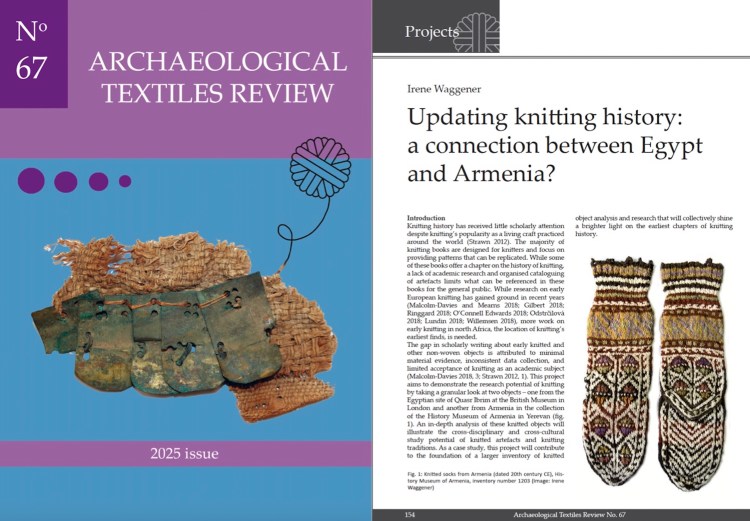
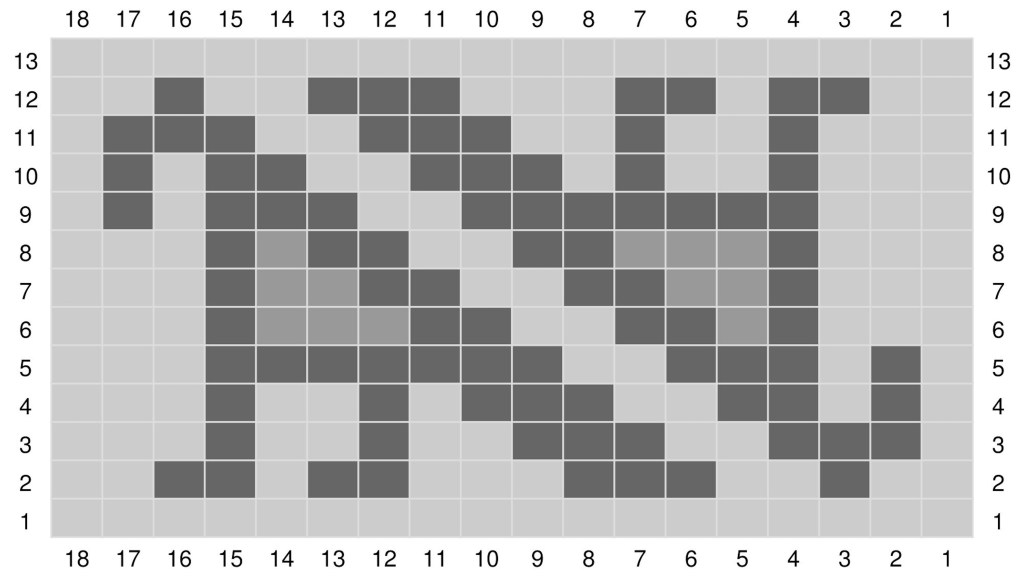
A knit fragment at the British Museum in London (EA72266) likely dating to Egypt’s Fatimid period and a pair of socks at the History Museum of Armenia in Yerevan (inventory number 1203) both bear a geometric bird motif that encourages us to consider the diversity of medieval Egypt and how that world may have shaped the development and practice of knitting. You can read more about my project to untangle the story of this knitted fragment and its motif and what this might tell us about the story of knitting in the latest Archaeological Textiles Review (no. 67, 2025).
Check out the full issue here. Download my article below:
 106 Meters from the Road