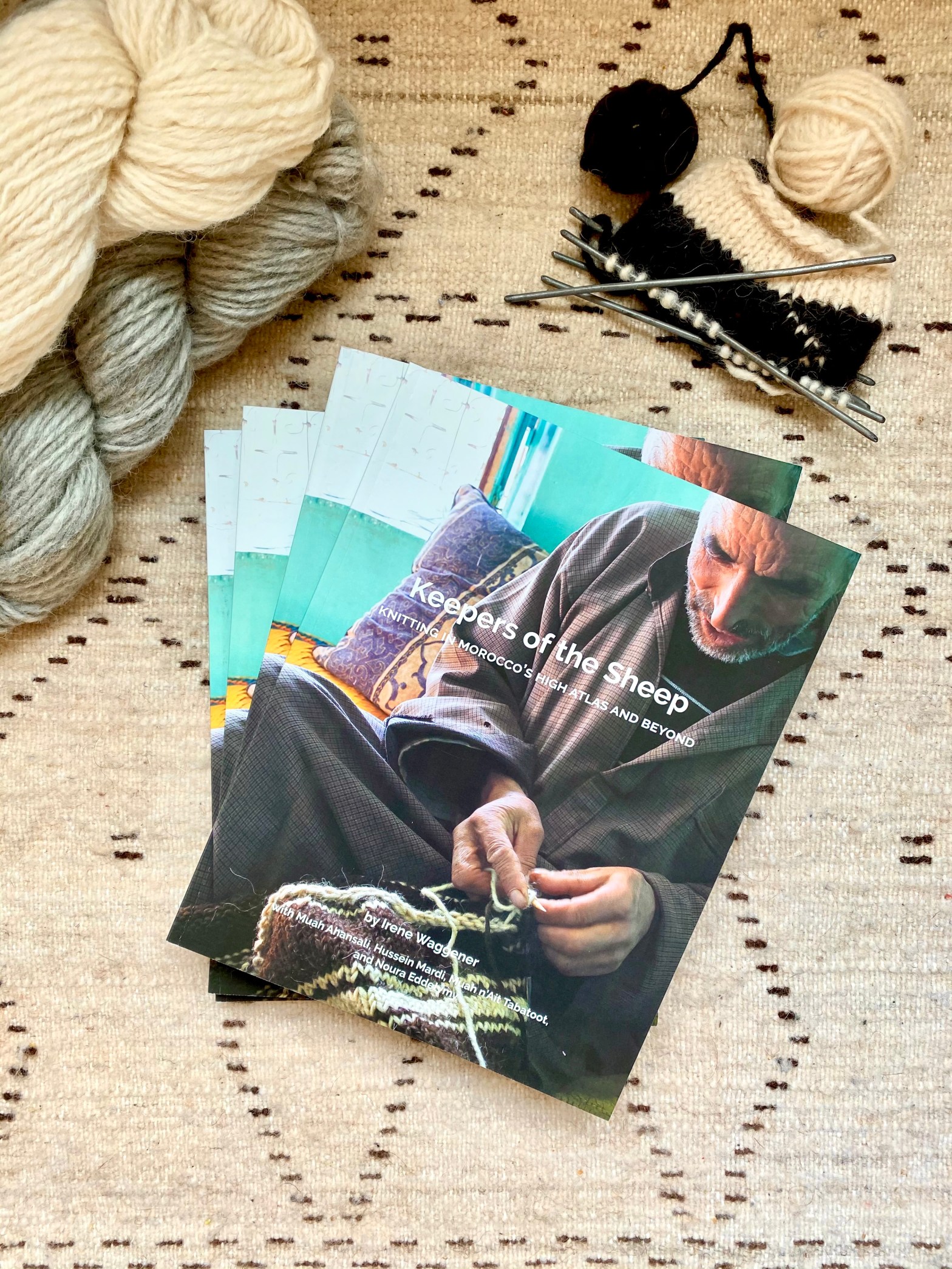
The question of knitting’s origins became a fascination for me when I was in my early twenties, but the limited information available at the time left me feeling unsatisfied. To be sure, the earliest chapters of knitting history are murky and obscure, making it very difficult to confidently say anything about the craft’s origins. Nevertheless,Continue reading “Why I wrote about knitting in Morocco (and, e-Book now available)”
Tag Archives: travel
Tarriwin, or Middle Atlas Leg Warmers, in Photos
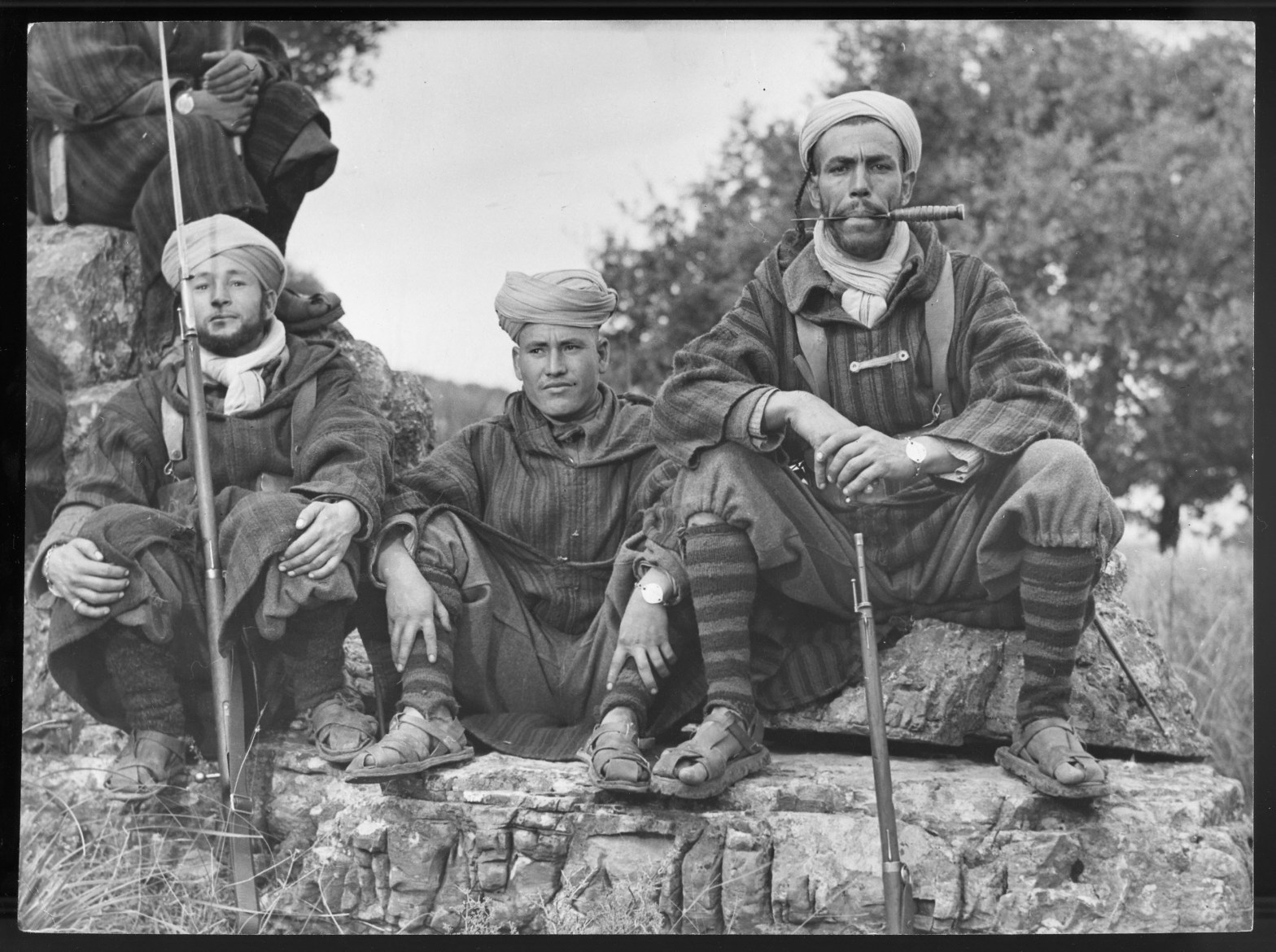
Two posts ago (here), I wrote about how I learned of tarriwin; my experience trying to find tarriwin knitters; and my hypothesis for the knitting technique used in making them. Following that post (here), I wrote about tarriwin knitting and how it might help to untangle the history of knitting. Now, I’d like to shareContinue reading “Tarriwin, or Middle Atlas Leg Warmers, in Photos”
Updating Knitting History
The oldest evidence for knitting, thus far, comes from medieval Egypt. These intriguing pieces, which range from technically simple to very advanced leave knitters and researchers with much to consider: Who knit these objects? How did they use them? How did knitting spread? How do these early knitting traditions relate to knitting practices today? ByContinue reading “Updating Knitting History”
Sock-Knitting Techniques from Armenian Knitters: Grafting Without a Tapestry Needle
Armine Gasparyan, a knitter from Hadrut, taught me how to graft stitches together without a tapestry needle. She uses this technique to finish inserted sock heels. As with grafting with a tapestry needle, you will need to have an equal number of stitches on each needle in order to carry out the steps correctly. AfterContinue reading “Sock-Knitting Techniques from Armenian Knitters: Grafting Without a Tapestry Needle”

