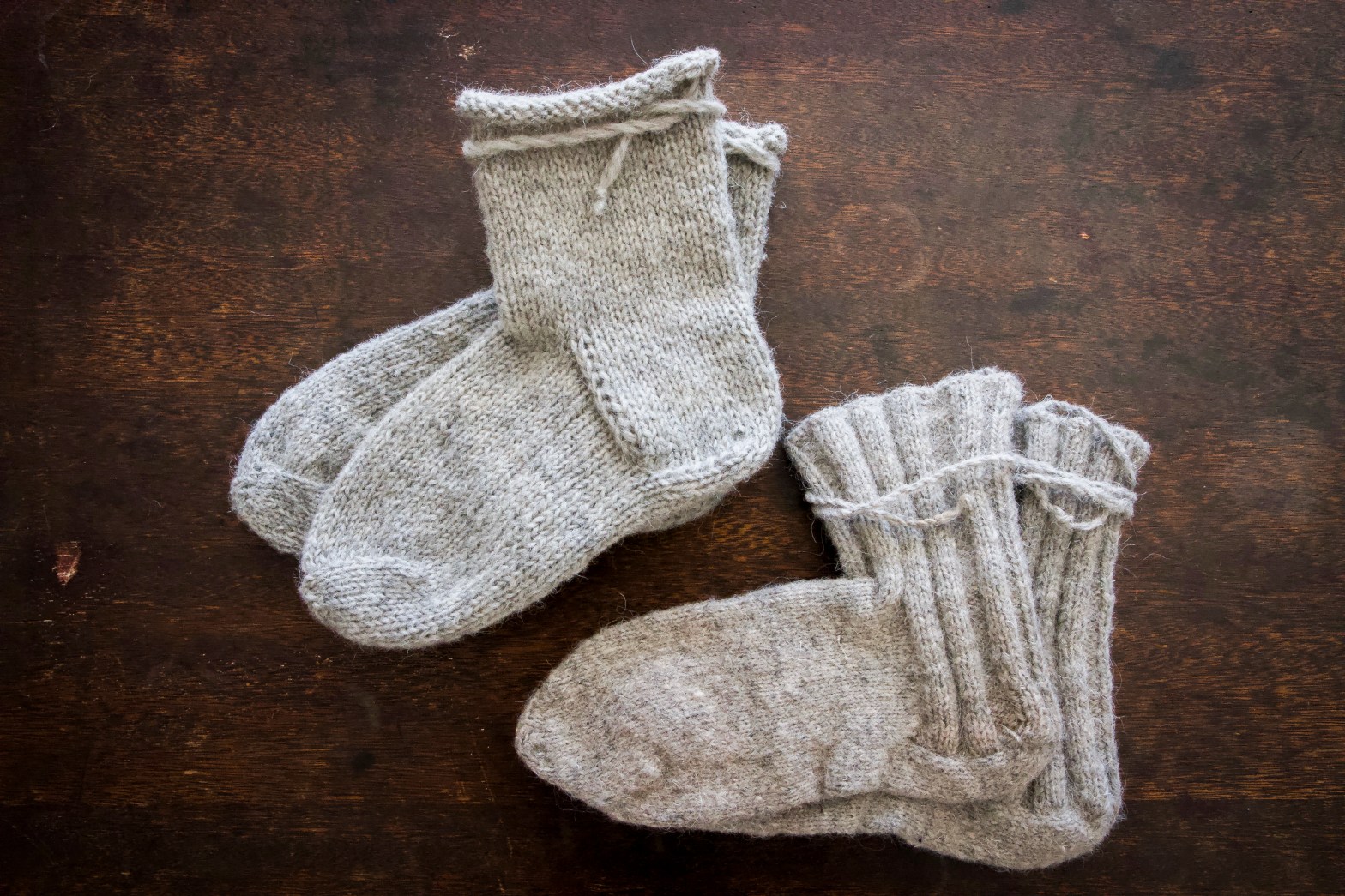
When talking about the origins of knitting, nalbinding is inevitably mentioned. This is because the objects we thought were the oldest knitted artifacts were in fact made by nalbinding, not knitting.(1) This is an easy mistake to make since nalbinding can produce a fabric that looks very similar to knitted fabric. But how similar are the two crafts? And, could knitting have come from nalbinding?
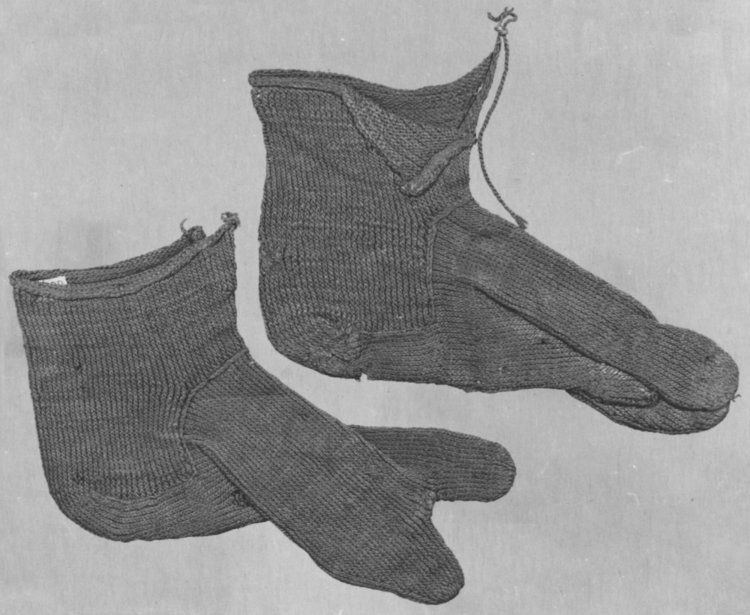
In order to explore these questions, I took a nalbinding class with Helen Hart when I visited Shetland, Scotland for Shetland Wool Week 2025. After learning the basics from Helen and gaining confidence with the Oslo stitch, this YouTube video by Sanna-Mari Pihlajapiha helped me learn how to do the cross-knit looping stitch, which is also referred to as the Coptic stitch or Tarim stitch. This is the stitch that was used to make the iconic split-toed socks in crimson yarn at the Victoria & Albert (V&A) museum in London. These socks have been dated to the 4th-5th centuries CE and were found in the burial grounds of Oxyrhynchus, a Greek colony on the Nile in central Egypt (information from museum page linked in image caption below).
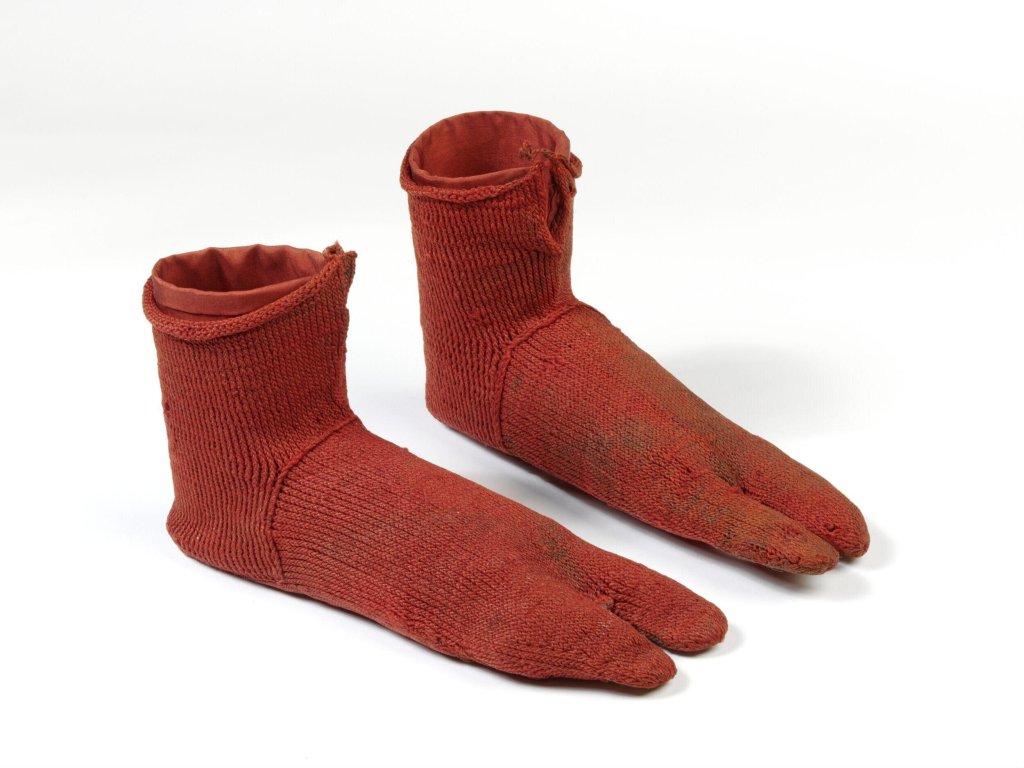
© Victoria and Albert Museum, London
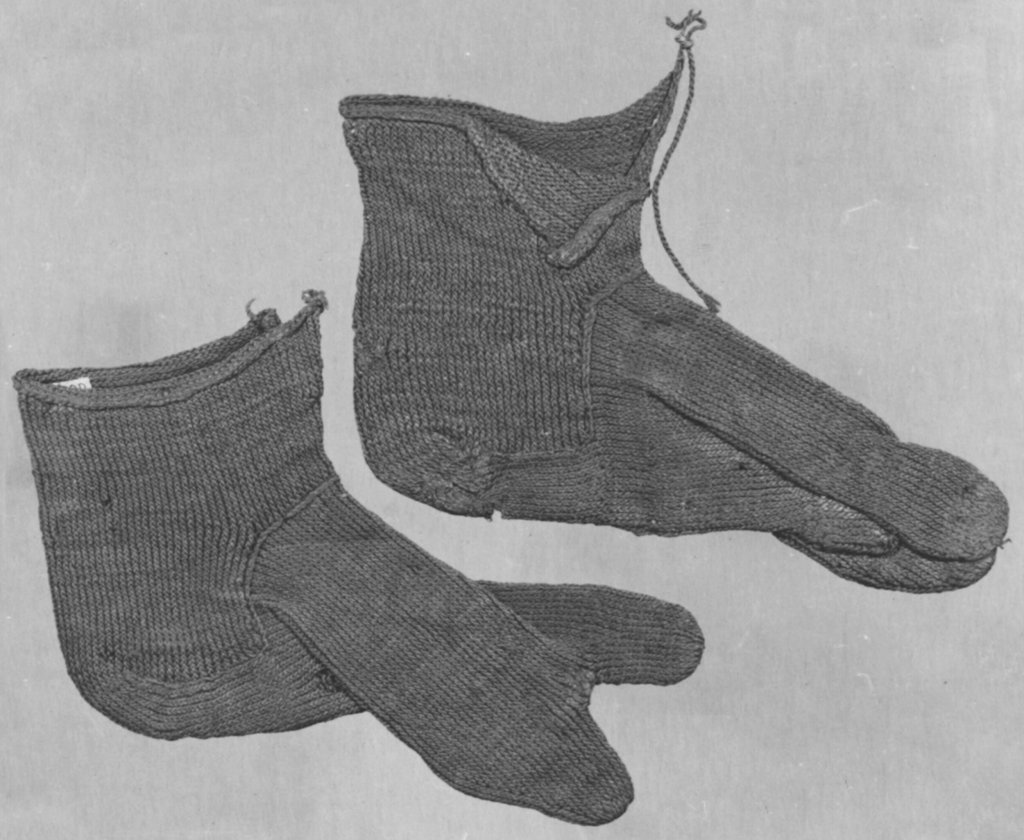
© Victoria and Albert Museum, London
Nalbinding: tools, materials, technique
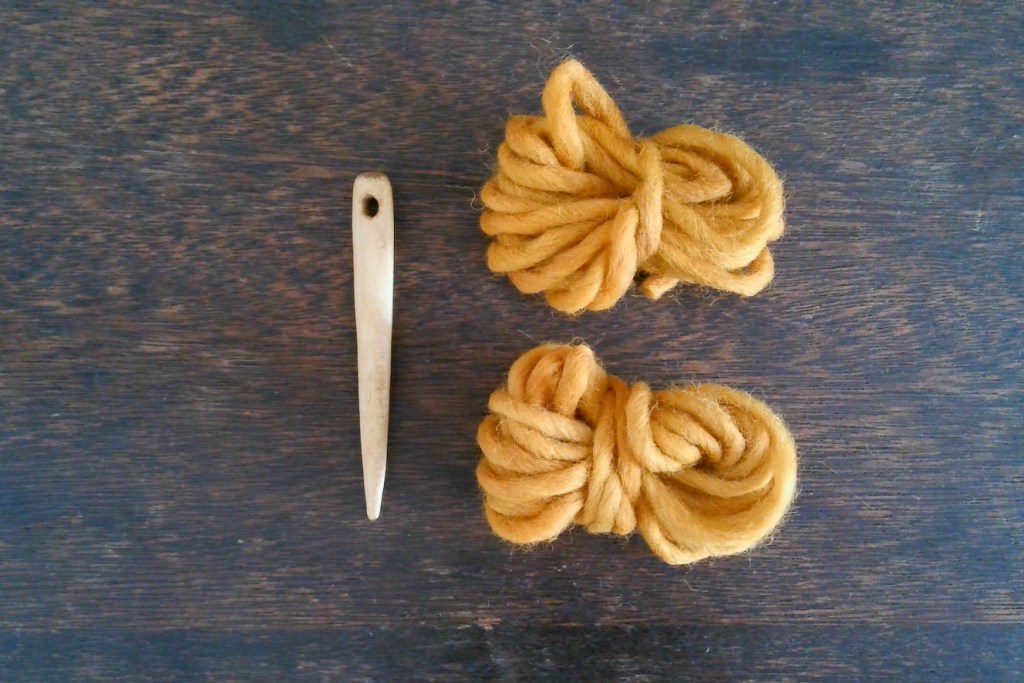
Nalbinding is done with a large, blunt, eyed needle made of wood, bone, or metal and a relatively short length of yarn (roughly the length of your arm). When more yarn is needed, the new length is spliced to the working length of yarn. Nalbound artifacts made of cotton, hemp, and wool have been found around the world.
Nalbinding is based on the formation of loops, which produce a variety of fabric types. There are many excellent books, blogs, and videos for how to do nalbinding (see notes below); but if you want a quick overview, this Wikipedia article is comprehensive and provides clear pictures and photos of the techniques and structures for some of the different fabric types.
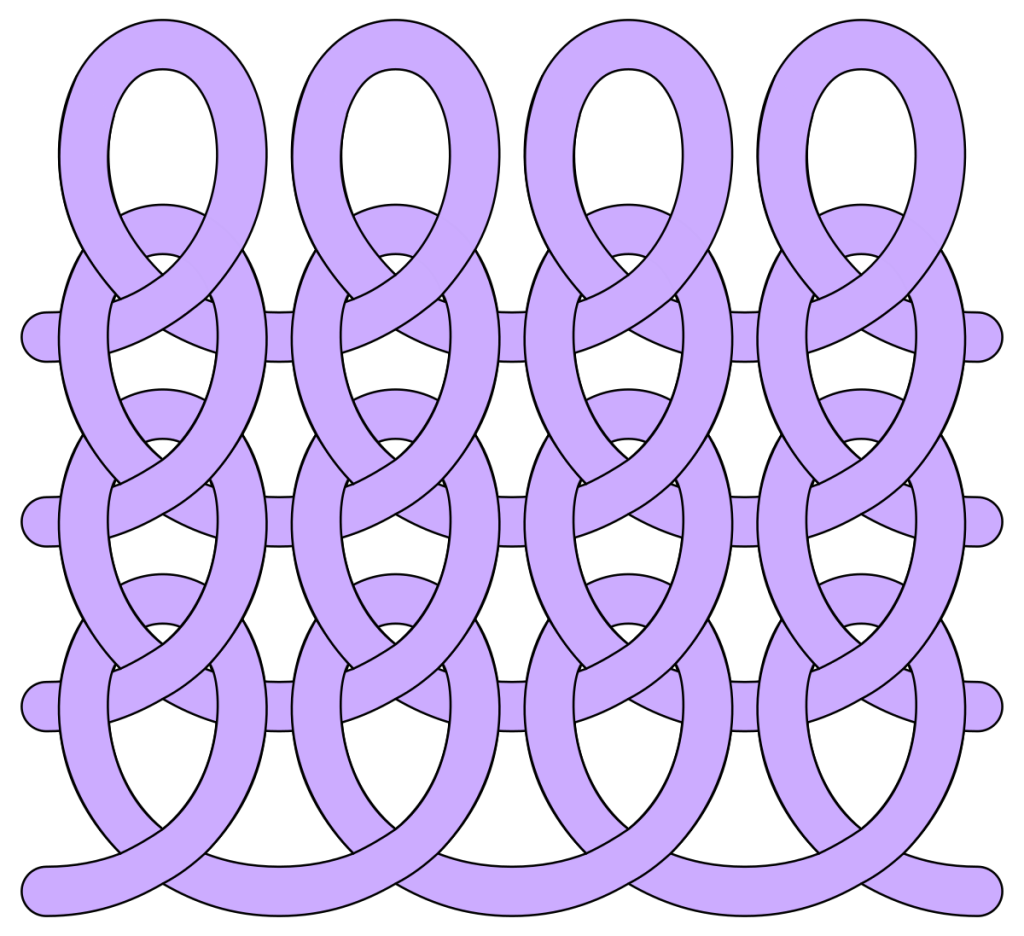
The cross-knit looping stitch is very simple. It starts with a chain of stitches that can be connected for working in the round or left unconnected for working flat (as in the videos below). When working with the front side of the fabric (which appears as knitted stockinette to a knitter), a new row of loops is created by inserting the needle behind the crossed legs of the previous loop in the fabric and drawing the length of yarn through. When working with the back side of the fabric (which appears as knitted garter to a knitter), a new row of loops is created by inserting the needle under the “arms” on either side of the crossed legs of the loop so that the working yarn is pulled through in front of the crossed legs of the loop (the YouTube video by Sanna-Mari Pihlajapiha demonstrates this if you want to learn how).
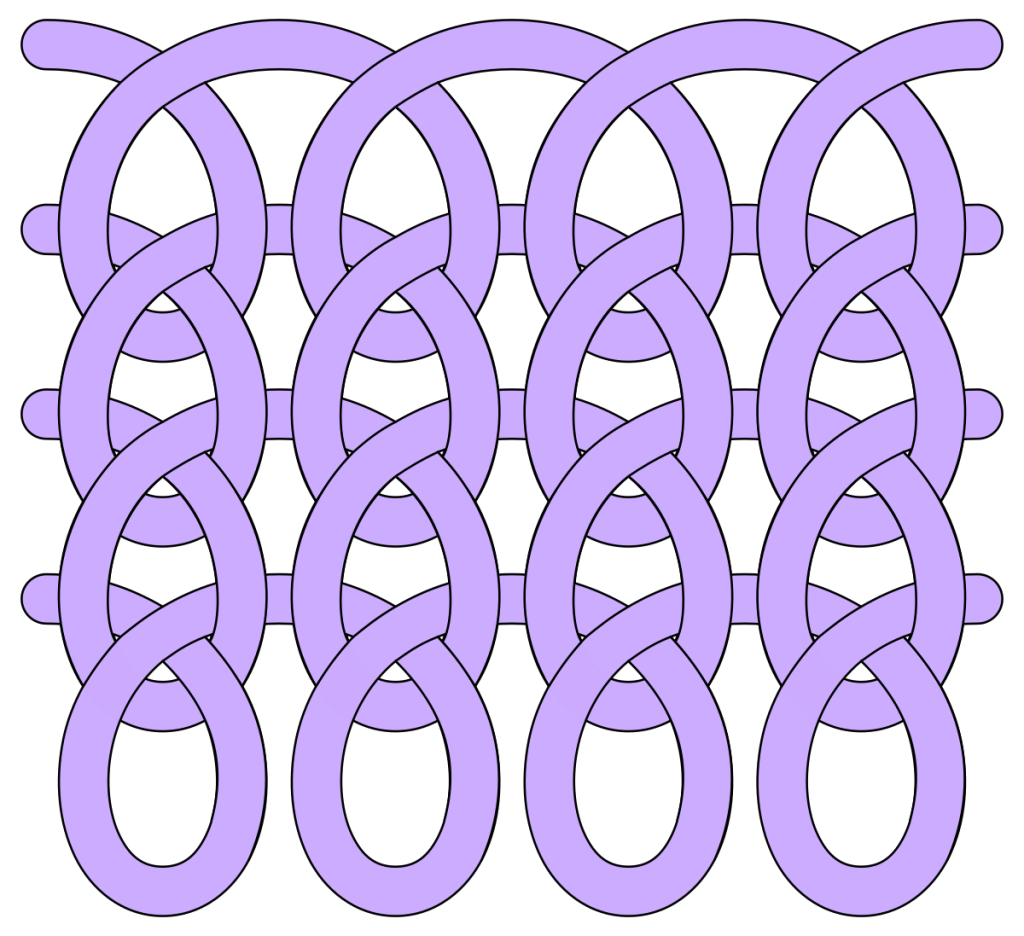
Von Stilfehler – Eigenes Werk, CC BY-SA 4.0, https://commons.wikimedia.org/w/index.php?curid=151851861
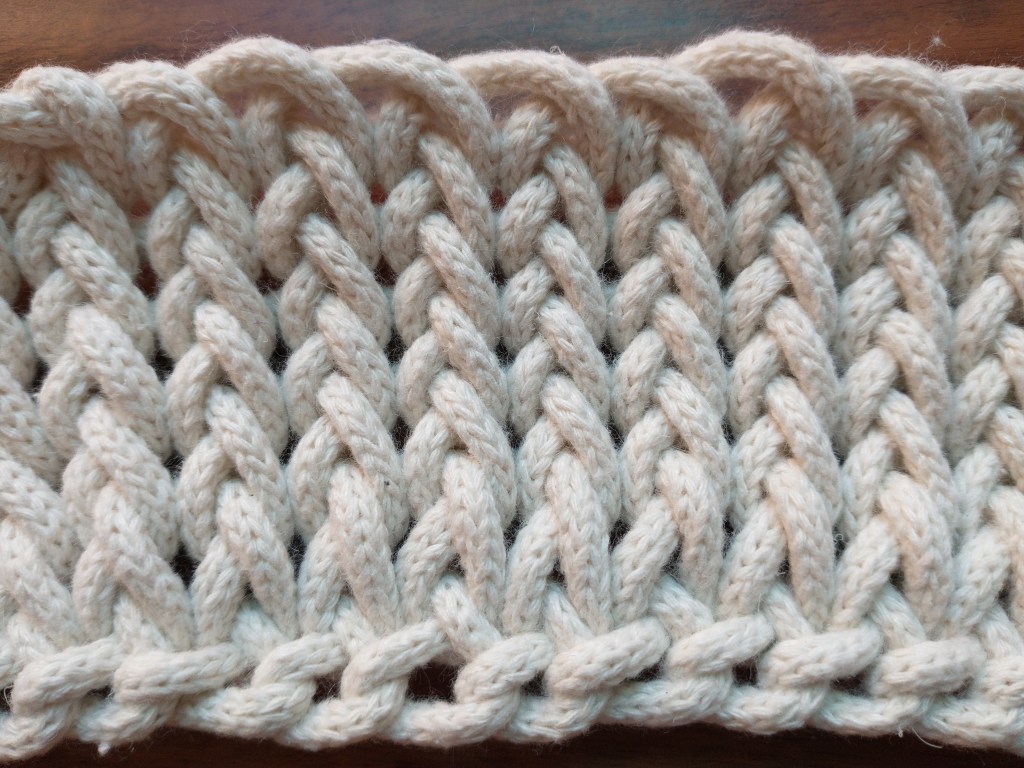
Von Stilfehler – Eigenes Werk, CC BY-SA 4.0, https://commons.wikimedia.org/w/index.php?curid=151570714
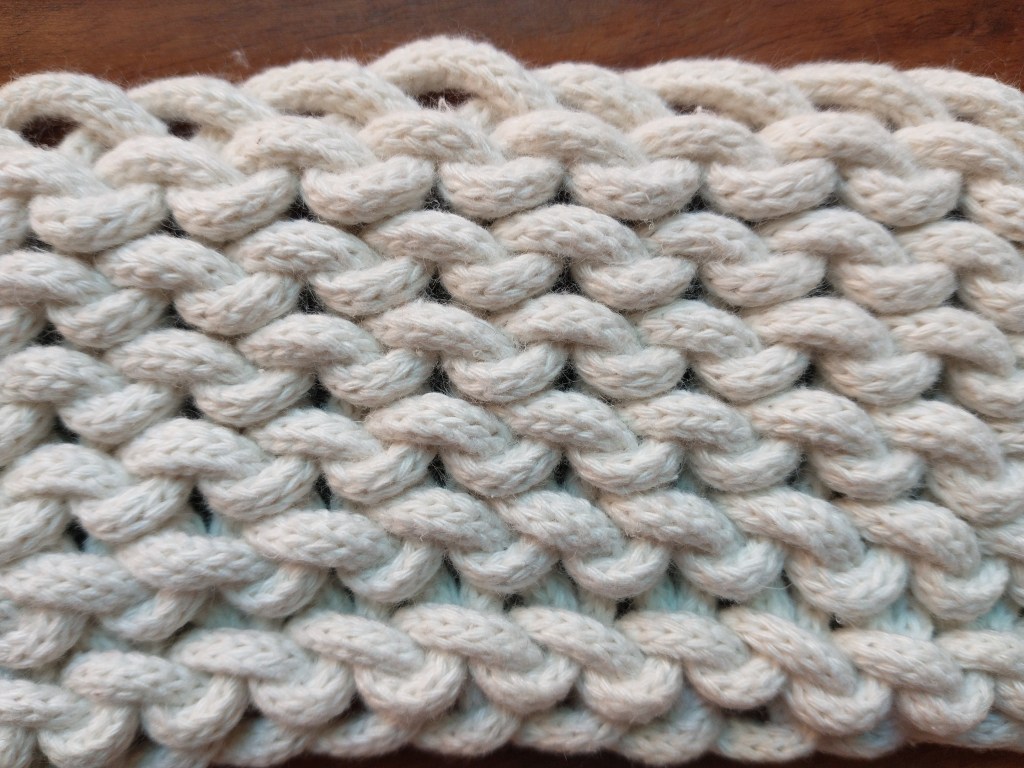
Von Stilfehler – Eigenes Werk, CC BY-SA 4.0, https://commons.wikimedia.org/w/index.php?curid=151570713
Knitting: tools, materials, technique
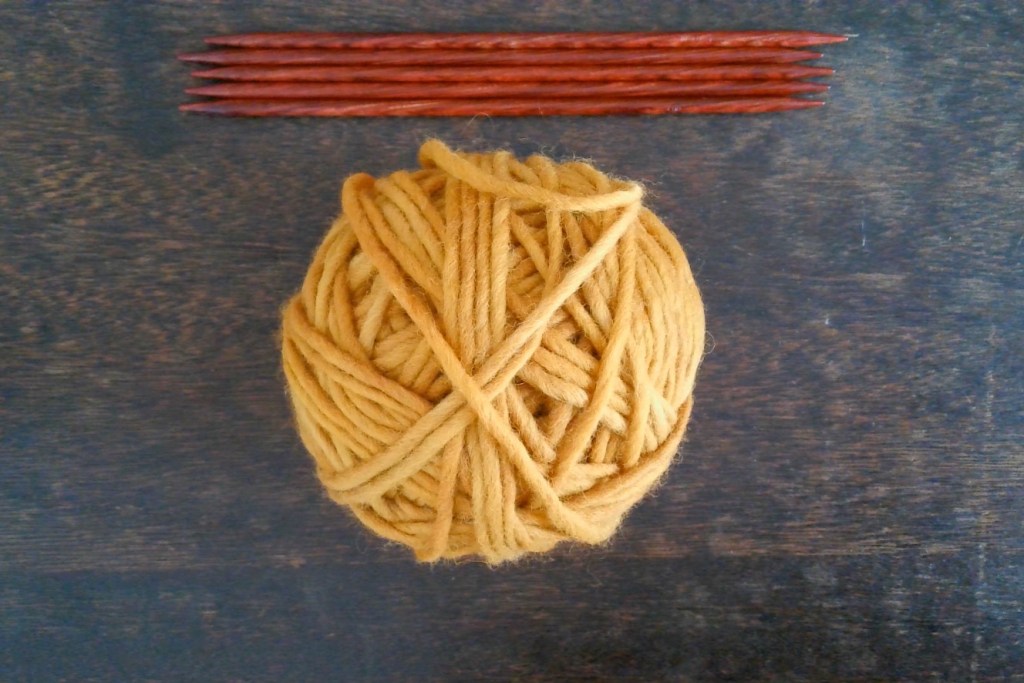
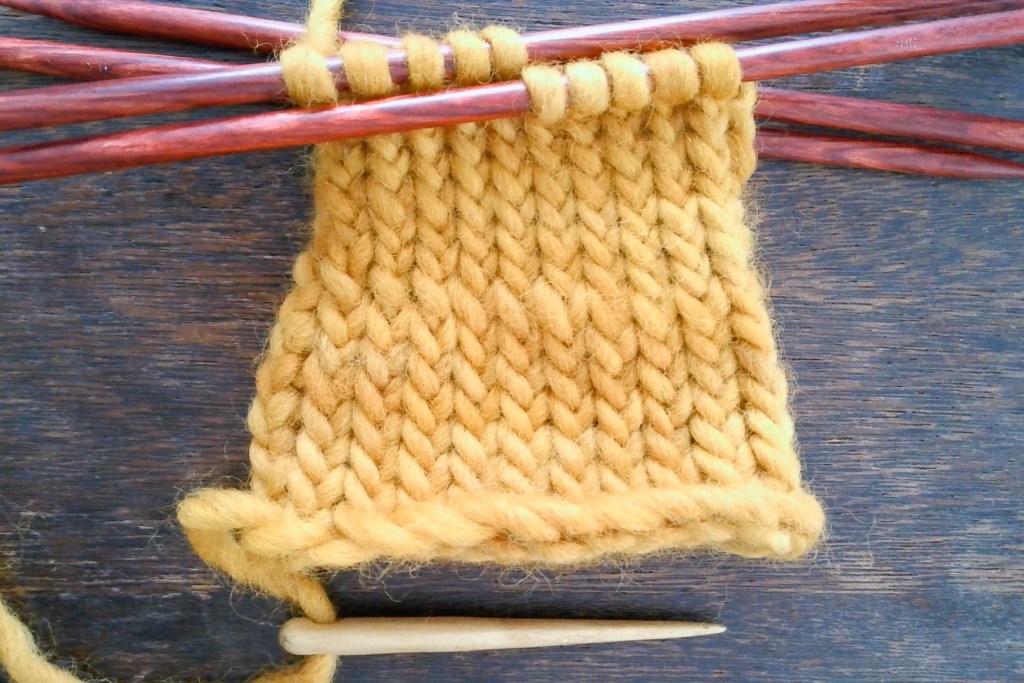
Knitting is done with at least 2 knitting needles (if working flat), which are straight, uniformly wide, and taper to a point at one tip (double-pointed needles for working in the round have tips on both ends). Very long lengths of yarn wound into a ball are used. When more yarn is needed, a new ball of yarn is added by splicing or tying the ends of the yarn together or simply beginning to work with the new yarn leaving a bit of length to be woven in later. Knitting yarn can be made from a variety of materials including cotton, silk, and wool.
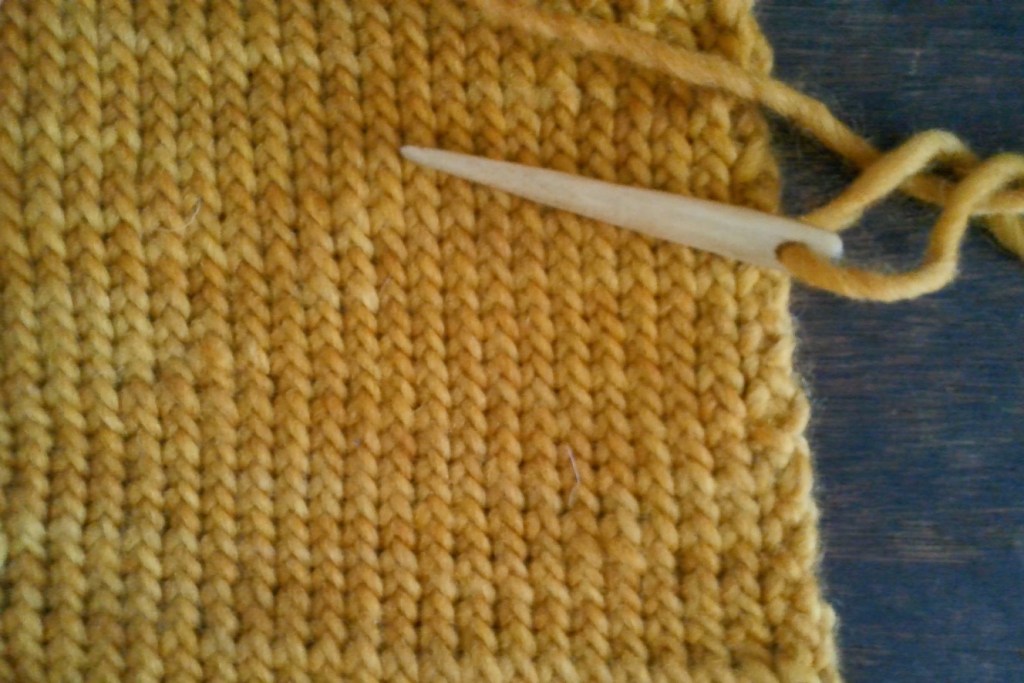
Very simply, knitting starts by casting stitches onto a needle. These stitches look like O-shaped loops that hang from the needle. They are worked back and forth (flat knitting, as in video below) or around and around (knitting in the round) by inserting another needle with no stitches (the working needle) into the first stitch on the needle holding the stitches; wrapping the yarn around the working needle; and using the working needle to pull the yarn through the stitch. This creates a new stitch on the working needle, so the ‘old’ stitch can be slipped off of the needle on which it was sitting. When all of the stitches have been worked in this way, what had been the empty working needle is now full of stitches, and it becomes the needle holding the stitches. The process is repeated again with a fresh working needle.
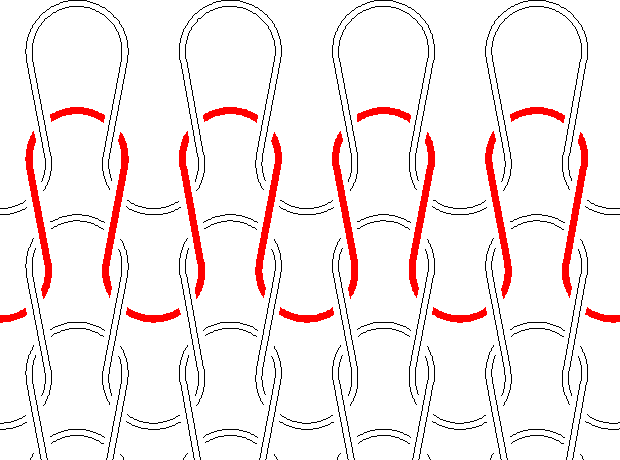
赤鉛筆 at Japanese Wikipedia, CC BY-SA 3.0 http://creativecommons.org/licenses/by-sa/3.0/, via Wikimedia Commons
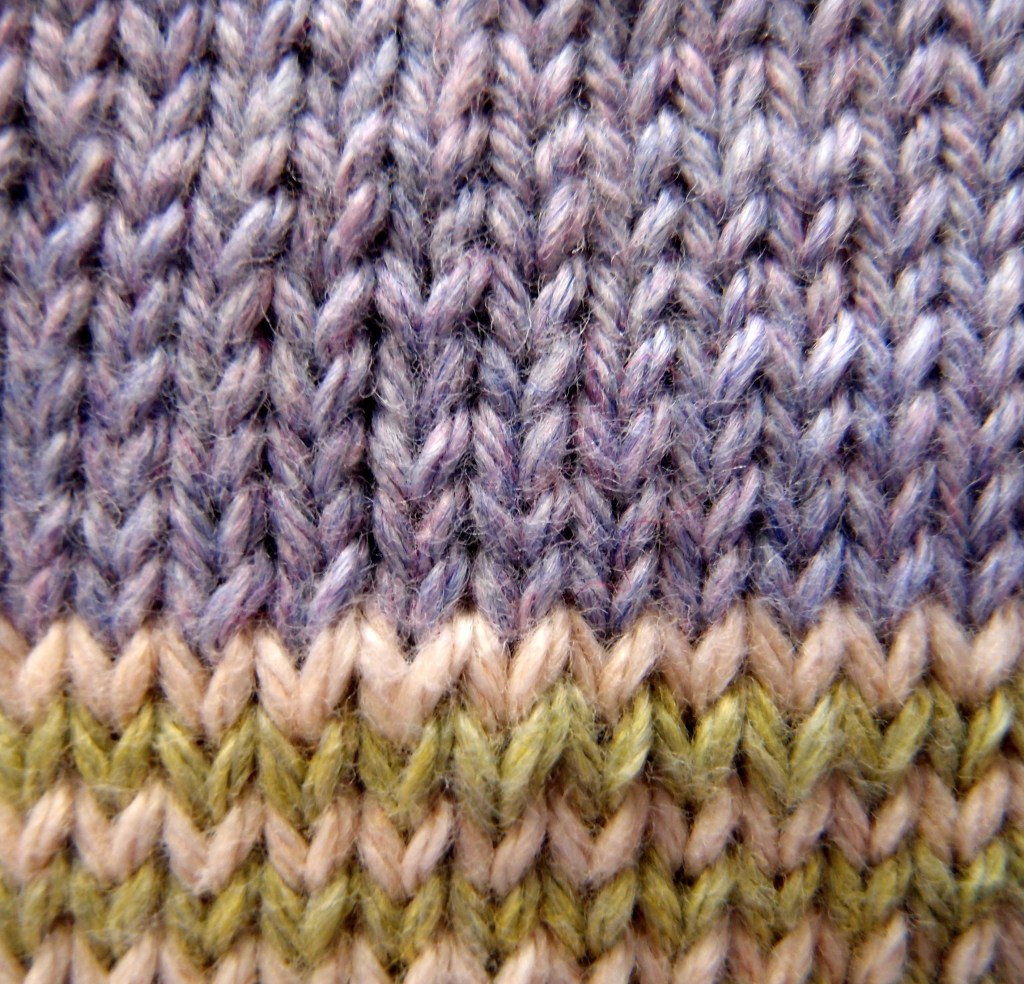
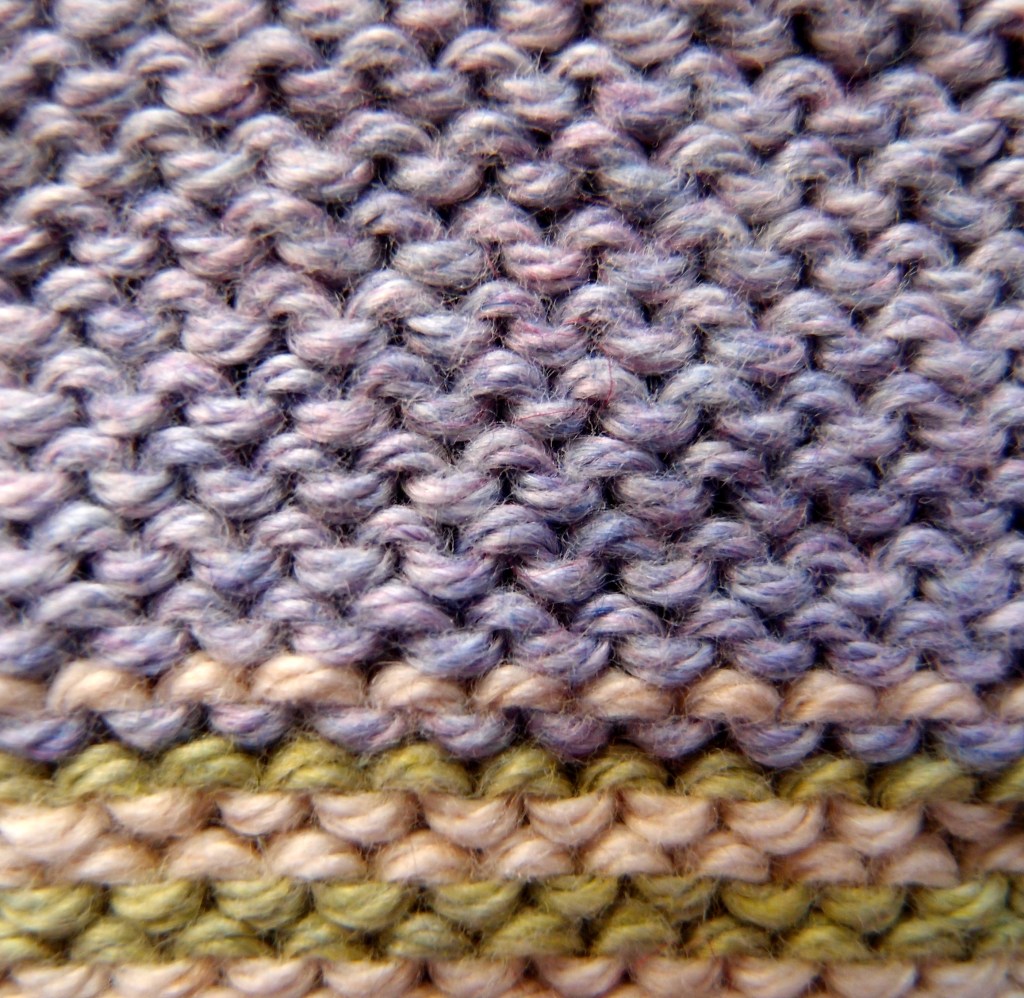
By Pschemp – Own work, CC BY-SA 3.0, https://commons.wikimedia.org/w/index.php?curid=18608485
Comparing nalbinding and knitting
As a knitter venturing into nalbinding, several differences between the two crafts stand out to me at this point.
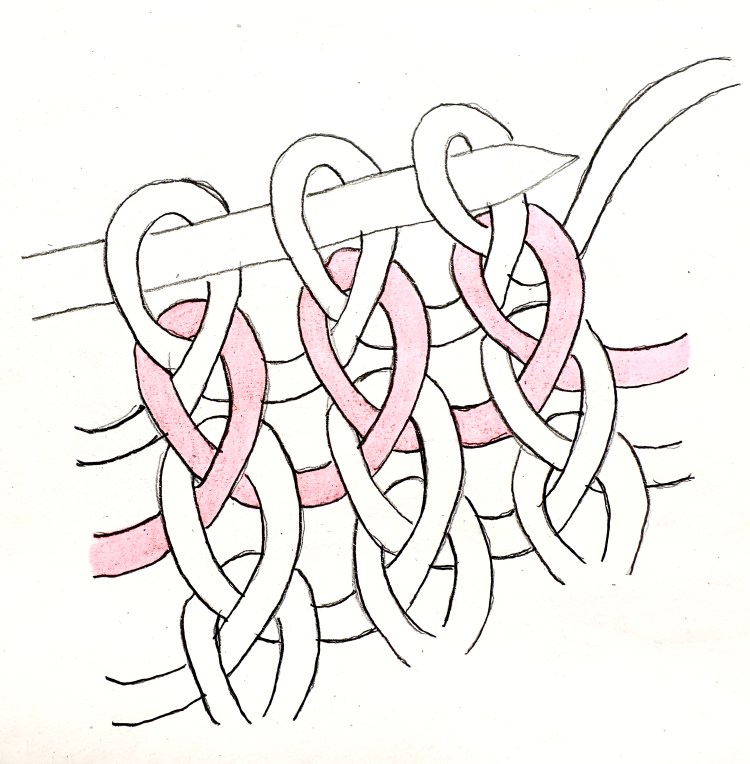
First, the structure of the loops are very different, but this can be hard to notice in the fabric of your own work. By placing the diagrams of the loop structures next to one another, it is easier to see this. One of the first things I notice is the direction of the loops – downwards for nalbinding (left) and upwards for knitting (right). The nalbinding loops are also ‘closed’ by the yarn crossing over itself and remind me very much of pretzels. In contrast, the knitting loops are ‘open’ at one end and look more like snakes winding back and forth around one another.
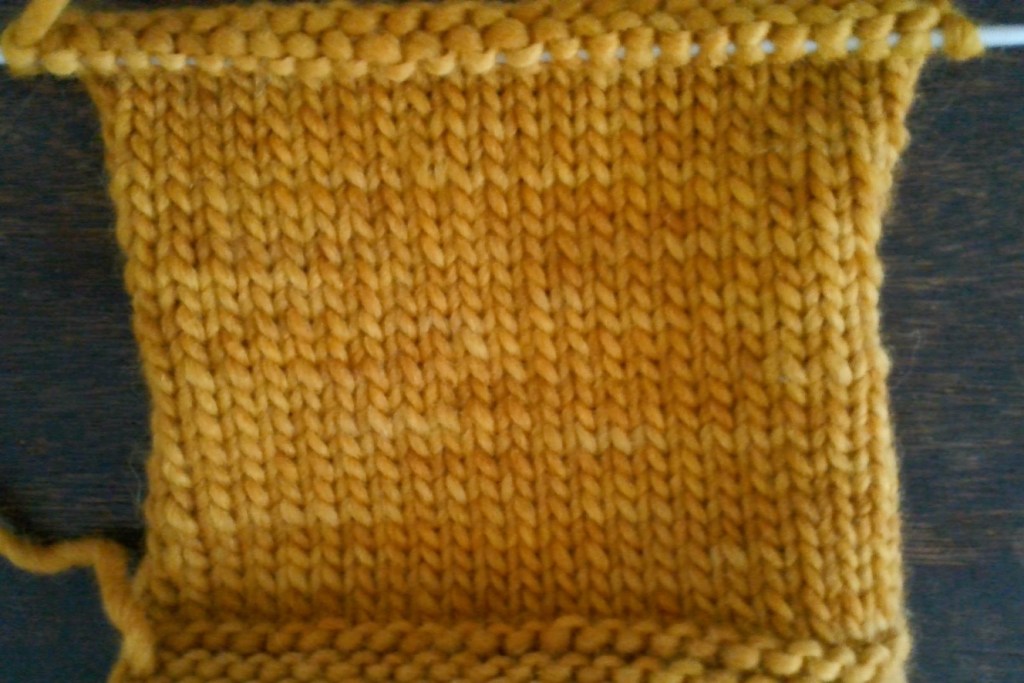
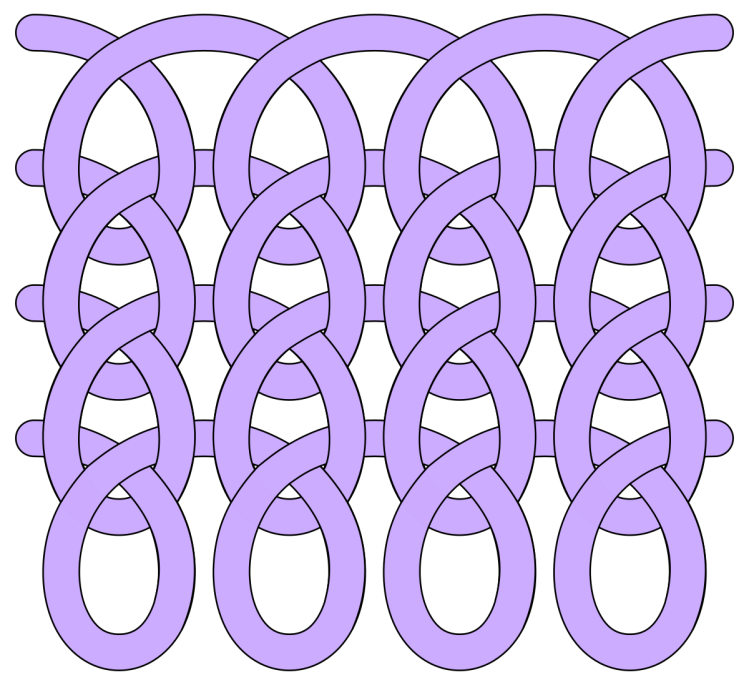
Von Stilfehler – Eigenes Werk, CC BY-SA 4.0, https://commons.wikimedia.org/w/index.php?curid=151851861
赤鉛筆 at Japanese Wikipedia, CC BY-SA 3.0 http://creativecommons.org/licenses/by-sa/3.0/, via Wikimedia Commons
Second, nalbinding feels more like sewing than knitting, especially since the yarn must be pulled all the way through in order to create a new loop. This means that I am working from the tail end of the working yarn, which is why nalbinding requires short lengths of yarn. In knitting, the working yarn isn’t pulled all the way through the loop. Instead, only enough working yarn to create a new loop is pulled through the old loop. This means that I am only using the working yarn from the point where it connects to the work, which makes it possible to work with extremely long lengths of yarn organized in a ball. The two actions – pulling the yarn all the way through (nalbinding) and grabbing just enough yarn to make a new loop (knitting) – feel very different in my hands.
Third, when nalbinding with a knitter’s eye, it looks as though I am working upside down since I insert my needle behind what looks like the bottom of a knitted stitch rather than the rounded top of a knitted stitch (when working with the front/stockinette side of the fabric). Explained another way, this means that I insert my nalbinding needle and draw the yarn all the way through behind what looks to a knitter like the two ‘legs’ of the stitch (see photos below).
Fourth, what I look at when working seems quite different between the two craft technologies. In nalbinding, I must look closely at the fabric I am creating in order to make my loops because the ‘X’ created by the yarn crossing in the previous row indicates where I must insert my needle to make a new stitch (photo below at left). When knitting, my eyes focus on the stitches sitting on my needle – it is almost unnecessary for me to look at the fabric I am creating. Each stitch is quite distinct and separate from one another on the needle. Furthermore, the stitch into which I must insert my working needle appears more as an ‘O’ in contrast to nalbinding’s ‘X’ (photo below at right).
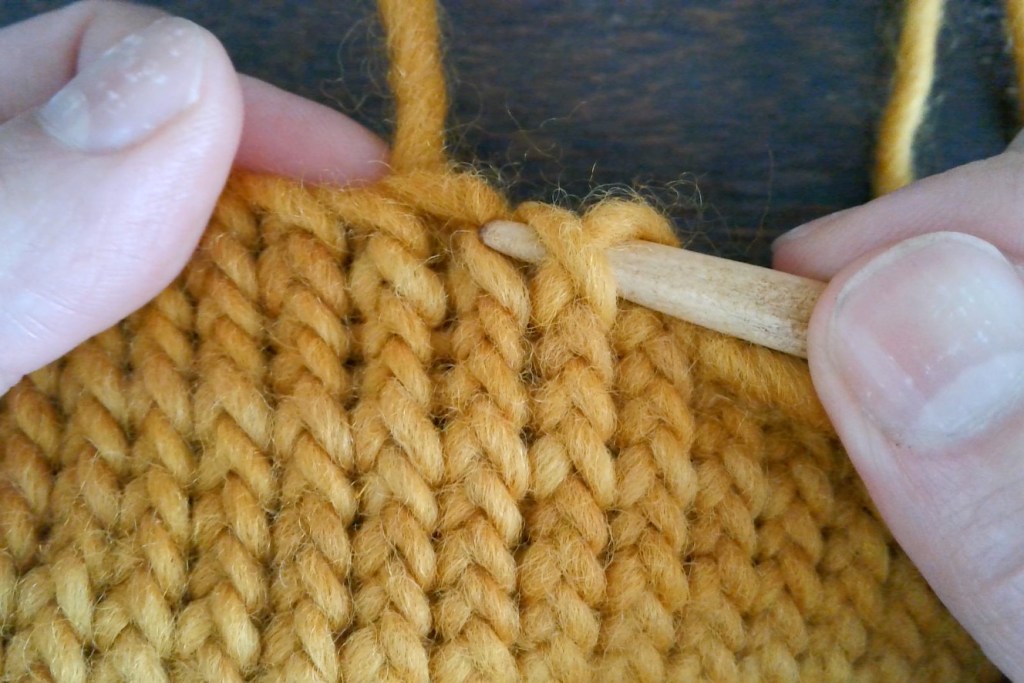
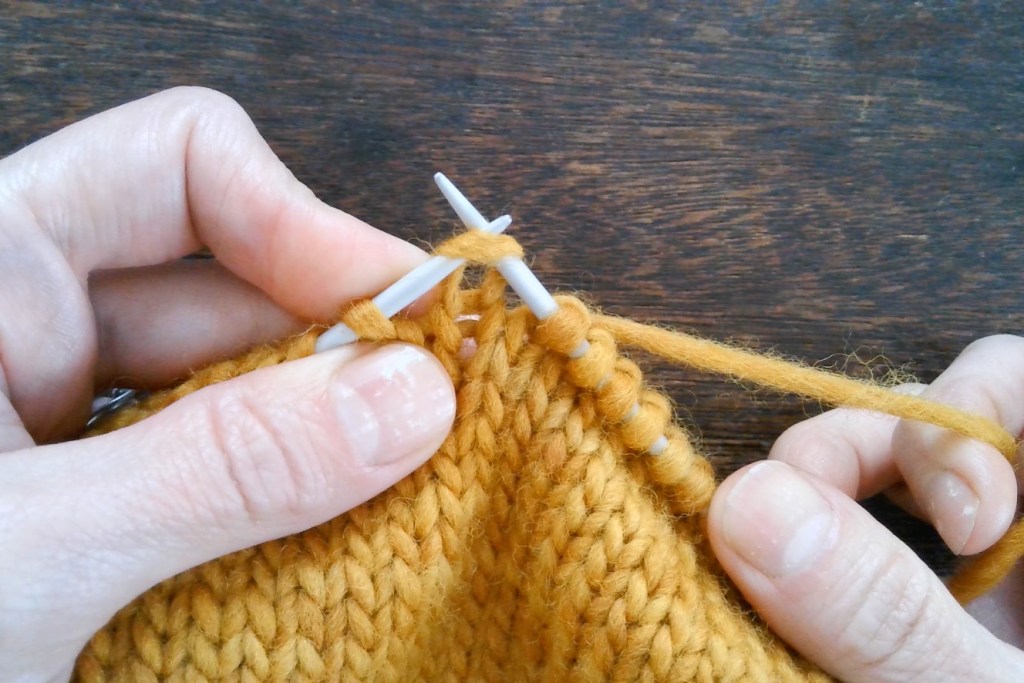
Lastly, when working nalbinding flat, it is possible to work back and forth along the front of the fabric using the same stitch rather than having to turn the work around and work the back using a different type of stitch as in knitting. I imagine that this flexibility would have made it easy to work the sock pattern used in the 4th-5th century sock at the V&A pictured above. How might this nalbinding characteristic have influenced the development of the sock pattern?
So, did knitting come from nalbinding?
When I first set out to write this post a week and a half ago, my answer would have been that, based on my observations outlined above, I lean more towards no. At the time, the two crafts felt very different in my hands. I couldn’t see how or why one would want to introduce multiple, straight needles into the cross-knit looping process and shift from drawing the length of the yarn all the way around a loop to only grabbing a portion of the working yarn through a loop.
However, while working with the stitch structure diagrams of the nalbound and knitted fabrics for this blog post, I began thinking about several things: one, the knitting diagram I chose shows an open loop structure; and two, the nalbinding diagram could present a twisted or crossed knit structure if worked from the opposite (starting) side as one might need to do when mending something. This raised two questions for me. How does crossed stitch knitted and cross-knit looping nalbound fabric compare? And, if I were to mend a nalbound sock with a damaged toe, thereby working from the opposite direction, would the unraveled section leave me with loops that look more like knitting?
赤鉛筆 at Japanese Wikipedia, CC BY-SA 3.0 http://creativecommons.org/licenses/by-sa/3.0/, via Wikimedia Commons
Von Stilfehler – Eigenes Werk, CC BY-SA 4.0, https://commons.wikimedia.org/w/index.php?curid=151851861
Being a very hands-on person, I nalbound a tube to experiment, and the result was incredible. While it is impossible to pull out stitches from the working side of the tube, I found that I could unravel it from the opposite (starting) side very easily. In fact, when unraveled from the starting side, the fabric behaves just like knitted fabric leaving you with loops for every wale.
I slowly unraveled several rounds while thinking about how this might translate into knitting. While doing this, I saw how the yarn passes through the top of the loop rather than wrapping around the legs of the loop. I could see how grabbing the working yarn with a tool (like a needle or hook) and pulling it through the loop as in knitting would reconstruct my fabric. This was the perspective shift for which I was looking. This provided a way to go from performing a motion more akin to sewing (nalbinding) to the type of motions familiar to me in knitting.
So, could knitting have developed out of a need to mend cross-knit looping nalbound socks? Perhaps. Would it be possible to see this in artifacts? Maybe. However, it was very difficult for me to see any differences between my nalbinding and knitting stitches in this experiment. But, there might be indicators with which I am currently unfamiliar given that I am new to nalbinding.
A revised hypothesis for the relationship between nalbinding and knitting
It seems that I have to modify my previous opinion about knitting coming from nalbinding. While the two craft technologies seem really different from a making perspective, they seem much more related from a mending perspective. This cognitive shift also has implications for my earlier theory about pattern transference, which I discuss in my book, Keepers of the Sheep: Knitting in Morocco’s High Atlas and Beyond. If nalbinding and what I will call ‘proto-knitting’ existed side-by-side in sock making and mending, pattern transference from nalbinding to knitting socks seems even more likely. As people became more proficient with ‘proto-knitting’ for mending nalbound socks, what would it take to start making tried and true patterns with the new craft technology?
© Victoria and Albert Museum, London
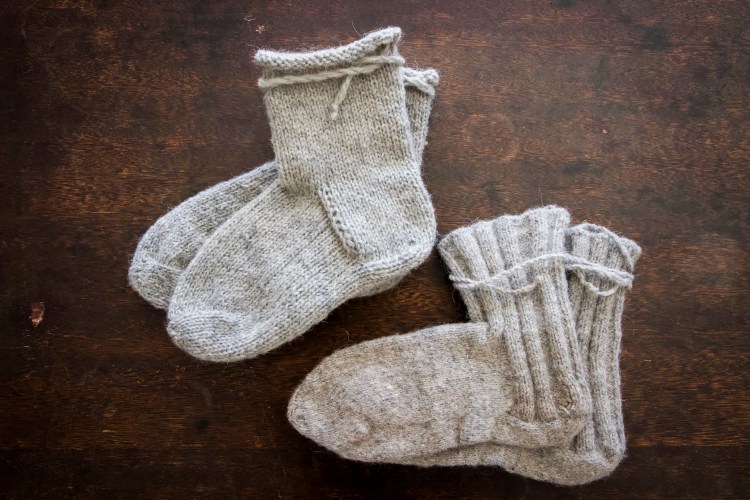
My theory for pattern transference is based on similarities between the nalbound socks at the V&A Museum and the tqasher qadeem (old style socks) Hussein Mardi taught me to make. As you can see in the photos above, the nalbound socks at the V&A Museum (left) and the Moroccan tqasher qadeem (right) are similar in their structure. Both were made from the toe to the heel and then up to complete the leg shaft. If you look closely, you can see a seam right before the ankle. Also, notice that the sole is worked to the very back of the heel before the heel is turned so that the work can continue up past the ankle and around the leg. This sole appears as a ‘tongue’ reaching from the back of the arch to the heel. Lastly, both the Egyptian nalbound and Moroccan knit socks are finished with a length of cord so that the top of the sock can be secured by wrapping it around the leg. The similarities in the construction of these two socks is striking and raises the possibility that the order of operations for making the Egyptian nalbound socks may have influenced the Moroccan knitted socks. However, this is highly speculative at this stage.
It is very difficult to prove whether knitting really came from nalbinding or that these two types of socks are related without archaeological, historical, or artistic evidence to back up these claims. Nevertheless, my experiences and observations have shown me that it could be possible to arrive at knitting from nalbinding, and I now have a better understanding of the two technologies in comparison. This will undoubtedly help me as I continue to research knitting history and practice. Our understanding of both nalbinding and knitting will likely evolve as more artifacts and information come to light; and one day, I will have to refine my ideas again.
Notes
(1) Socks and textile fragments with a looped structure resembling knitting were found at Dura Europos in Syria and various sites in Egypt. These pieces were dated to the early centuries of the common era and were thought to be the earliest evidence for knitting. However, in 1895, Louise Schinnerer determined that the socks from Egypt were not knit but made with a single-needle looping technique popularly known as nalbinding in English, which is derived from the Norwegian word, Nålbinding (Classen-Büttner, p.10).
In his book, A History of Hand Knitting, Richard Rutt states that nalbinding probably gave way to knitting between 500 and 1200 CE (p.39).
Recommended Reading
Classen-Büttner, U. (2015) Nalbinding: what in the world is that? Norderstedt: Herstellung und Verlag: Books on Demand.
De Moor, A.; Fluck, C.; Linscheid, P. (2013) Drawing the Threads Together: Textiles and Footwear of the 1st Millennium AD from Egypt. Tielt: Lannoo Publishers.
Pasanen, Mervi. (2023) With One Needle: How to Nalbind. Furulund: Chronocopia Publishing. AB
Rutt, Richard. (1987) A History of Hand Knitting. Loveland: Interweave Press.
Schinnerer, L. (1895) Antike Handarbeiten. Vienna: Waldheim.


Thank you for the post on Nalbinding and early knitting dn the previous one about the origins of knitting. I am very interested in these and will read them again and some of your references. Good to see the practical samples too.
Hello! Thank you for your feedback. I’m happy to hear that you enjoyed the posts.